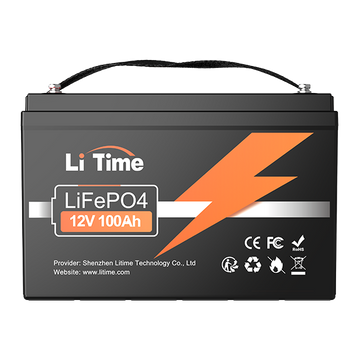
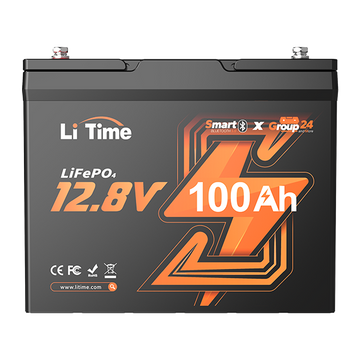
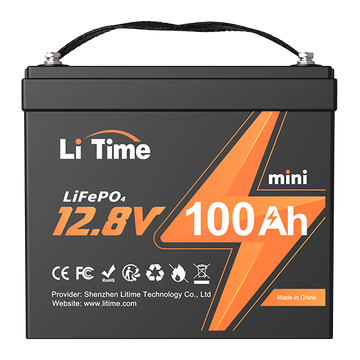
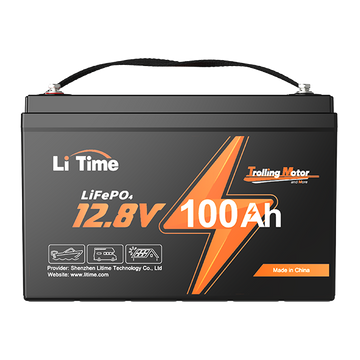
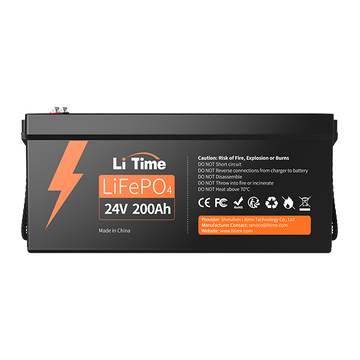






Lithium ion deep cycle batteries are transforming modern energy storage, offering lightweight design, high efficiency, and exceptional longevity. Ideal for solar, RV, marine, and off-grid systems, they deliver consistent power, fast charging, and low maintenance, making lithium ion battery the preferred choice for reliable, sustainable energy in 2026.
- Part1.What is Lithium Ion Deep Cycle Battery?
- Part2. What is the Lead-acid battery?Lithium-ion vs Lead Acid
- Part3.What is a Lithium Ion Deep Cycle Battery used for?
- Part4.Best Lithium Ion Deep Cycle Battery【2026】
- Part5.Lithium Ion Deep Cycle Battery Electrical Terms
- Part6.Lithium Ion Deep Cycle Battery FAQS
- Conclution
Part1. What is Lithium Ion Deep Cycle Battery?
A lithium ion deep cycle battery is a rechargeable energy storage device that uses lithium-based chemistry and is designed for deep discharge and recharge cycles.
Unlike regular lithium batteries (used in phones or laptops), deep cycle barrety means it can safely discharge up to 80–100% of its capacity repeatedly without damaging its internal structure.
While "lithium ion" is a broad category, the specific chemistry used for almost all deep cycle applications is Lithium Iron Phosphate (LiFePO4 or LFP). When people talk about lithium deep cycle batteries today, they usually mean LFP.
Lithium ion batteries use lithium metal oxides as the cathode material, graphite as the anode material, and a non-aqueous electrolyte. They are known for their long cycle life, high energy density, low self-discharge rate, and high operating voltage.
Because of these advantages, lithium ion batteries are widely used in various consumer electronics, such as smartphones, tablets, and laptops. They also play a critical role in the electric vehicle and power battery sector.
Main Types of Lithium Ion Batteries
- Lithium Iron Phosphate (LiFePO₄) Battery-Nominal voltage: 3.2V
- Lithium Cobalt Oxide (LCO) / Lithium Manganese Oxide (LMO) Batteries-Nominal voltage: 3.7V
- Ternary Lithium Battery (NCM/NCA)-Nominal voltage: 3.7V
Chemical Principles of Lithium Ion Batteries
Lithium ion deep cycle batteries use a lithium-based cathode (e.g., LiFePO₄ or LiCoO₂), a graphite/carbon anode, and an organic electrolyte. During charge, Li⁺ moves to the anode; during discharge, it returns to the cathode—so they’re also called “rocking-chair” batteries.
What is the starter battery?Deep Cycle Battery differences
Starter Battery (or Cranking Battery) primary jobn is delivering a massive burst of power for a very short time (3-5 seconds).
| Feature | Starter (Cranking) Battery | Deep Cycle Battery |
|---|---|---|
| Primary Purpose | Deliver a very high burst of current | Deliver a moderate sustained current |
| Plate Design | Many thin plates (max surface area) | Fewer thick plates (for durability) |
| Key Metric | Cold Cranking Amps (CCA) | Amp-Hour (Ah) Capacity |
| Discharge Depth | Shallow (3-5%) | Deep (50-80% routinely) |
| Cycle Life | Low (50-100 deep cycles can ruin it) | High (Designed for hundreds/thousands of cycles) |
| If Deeply Discharged | Damaged quickly. Plates sulfate and corrode. | Built for it. The core design function. |
| Common Types | Flooded Lead-Acid, AGM | Flooded Lead-Acid, AGM, Gel, LiFePO4 |
| Example Use | Start a car engine, then rest. | Power a campsite for a weekend, then recharge. |
LFP Deep Cycle Battery Advantages and Disadvantages
Main Advantages
- Superior Energy Density & Lightweight Design: Delivers more usable power in a compact, lightweight form—perfect for space- or weight-sensitive applications.
- Extended Cycle Life: Can last for thousands of cycles with minimal degradation.
- Deeper Depth of Discharge (DoD): Allows safe discharge down to 80–100% of total capacity, offering more usable energy per cycle compared to lead-acid batteries that are typically limited to about 50% DoD.
- Faster & More Efficient Charging: High charge acceptance and superior round-trip efficiency mean quicker charging times and reduced energy loss.
- Minimal Maintenance: Protects against overcharge, over-discharge, and overheating.
Main Disadvantages
- Higher Initial Cost: Lithium ion deep cycle batteries cost several times more upfront than equivalent lead-acid systems, though their long service life often offsets this over time.
- Safety and Thermal Management Requirements: Proper BMS control and thermal regulation are vital to prevent overheating or performance loss under extreme conditions.
- Specialized Charging Needs: They require compatible chargers or solar controllers designed for lithium chemistry to maintain health and efficiency.
- Recycling & Supply Chain Limitations: While deep cycle lithium battery recycling technologies are improving, global recycling infrastructure and raw material supply chains are still developing.
Read More: AGM vs Lithium Ion Battery: What Actually Matters?
Part2. What is the Lead-acid battery?Lithium-ion vs Lead Acid

Lead-acid battery is the traditional rechargeable battery type that stores energy through a chemical reaction between lead plates and sulfuric acid (including flooded, AGM, and gel varieties).
Lead-acid batteries also tend to charge more slowly, experience more voltage sag under high loads, and may require more care (especially flooded types), which is why they’re often chosen for budget builds or occasional use—while deep cycle lithium ion is favored for frequent cycling and long-term off-grid reliability.
| Feature | Lithium Ion deep cycle (LiFePO₄) | Lead Acid (AGM / Gel / Flooded) |
|---|---|---|
| Cycle Life | 3000–6000+ cycles | 300–800 cycles |
| Usable Capacity (DoD) | 80–100% | 50–60% |
| Weight | ~50% lighter | Heavy |
| Efficiency | 95–99% | 70–85% |
| Maintenance | None | Regular (for flooded) |
| Charging Speed | Fast (2–4 hrs) | Slow (8–12 hrs) |
| Cost (Initial) | Higher | Lower |
| Lifetime Cost | Lower overall | Higher (frequent replacement) |
| Safety | Stable (LiFePO₄) | Acid leaks / gas risks |
| Temperature Tolerance | Moderate | Better in cold environments |
Read More:AGM vs Lithium Ion Battery: What Actually Matters?
Part3. What is a Lithium Ion Deep Cycle Battery used for?
Lithium ion deep cycle batteries are advanced energy-storage solutions designed for continuous, repeated discharge and recharge cycles.
Unlike standard batteries that provide short bursts of power, deep cycle lithium iron systems are built for long-duration, steady energy delivery, making them ideal for off-grid, renewable, and mobile power applications.
Off-Grid Solar and Wind Energy Storage: Store energy from solar panels or wind turbines during the day to power homes, cabins, or solar energy systems at night or on cloudy days.Off-Grid lithium battery’s high efficiency ensures maximum use of every watt generated.
Read More:How Much Does a 10kW Solar System with Battery Cost in 2025 Australia?
Recreational Caravan & RVs and Camping Systems: Provide stable power for lights, appliances, and electronics while on the road or off the grid. Compared with lead-acid batteries, caravan lithium battery options last longer, recharge faster, and deliver consistent voltage for sensitive devices.
Marine and Boating Power: Supply energy for trolling motors, navigation systems, refrigeration, and cabin lighting. Marine lithium batteries’ lightweight design and vibration resistance make them ideal for marine environments.
Uninterruptible Power Supplies (UPS) and Backup Systems: Deliver reliable backup energy dual battery system to critical equipment—computers, communication systems, or medical devices—during grid failures or outages.
Electric and Hybrid Applications: Serve as integrated energy storage for small electric vehicles, auxiliary power units (APUs), and mobile service or fleet equipment that require compact, high-density power sources.
Remote or Auxiliary Power: Power remote cabins, security cameras, monitoring systems, and sensors. Lithium deep cycle batteries’ long lifespan and maintenance-free operation make them dependable for hard-to-reach locations.
Microgrids and Emergency Energy Storage: Support community or industrial microgrids in both grid-tied and islanded modes, providing efficient, scalable, and reliable backup power.
Part4. Best Lithium Ion Deep Cycle Battery【2026】
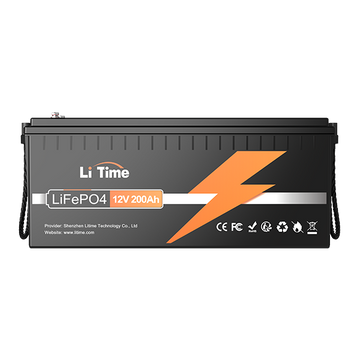
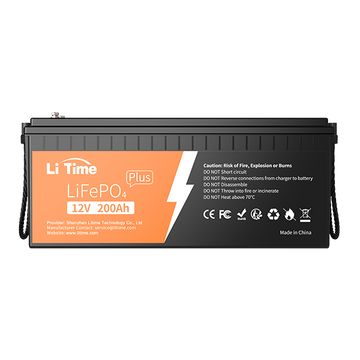
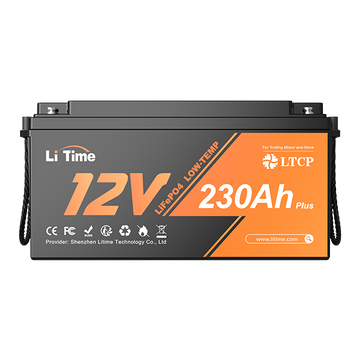
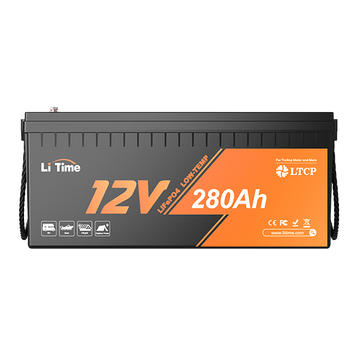
LiTime specializes in LiFePO₄ lithium deep cycle batteries built for off-grid, RV, marine, and solar power systems, offering long-lasting, safe, and efficient energy storage for modern applications.

Why LiTime Stands Out
- LiFePO₄ chemistry: safer, more stable, 4000+ cycle life
- Smart monitoring: Bluetooth-enabled real-time data
- Integrated Safety: Built-in BMS safeguards against overcharge, over-discharge, and overheating.
- Low-temp charging protection: ensures safe winter performance
- Low Maintenance: No acid, corrosion, or water top-ups required.
Recommended Models
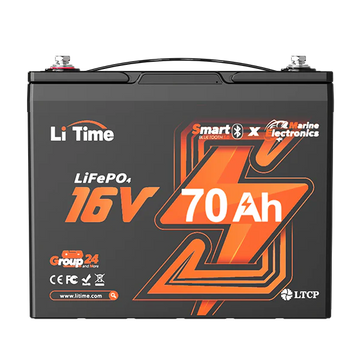
- Primary Pick – LiTime 12V lithium ion deep cycle Battery: Compact and powerful (~1280Wh usable energy), ideal for RVs, small solar setups, and marine use. It features a long cycle life, lightweight design, and a built-in Battery Management System (BMS) for safety and reliability.
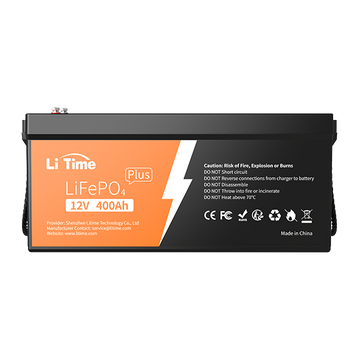
- High-Capacity Options – LiTime 12V 200Ah & 12V 400Ah Batteries: Designed for higher energy demand or multi-battery setups, these models deliver large storage capacity, efficient power output, and rugged IP-rated protection for harsh environments.
Part5.Lithium Ion Deep Cycle Battery Electrical Terms
Voltage:Just as water flows due to a difference in water level, electric charge flows only when there is a potential difference between two points in a circuit. This potential difference is called voltage. It is usually represented by U, with the unit volt (V).
Nominal Voltage:Nominal voltage is the optimal voltage at which an electrical device is designed to operate continuously. Excessive voltage may damage equipment, while insufficient voltage can prevent proper operation (such as dim lights or stalled motors). Operating at nominal voltage ensures stable performance and longer service life.
Alternating Current and Direct Current (AC / DC)
- AC (Alternating Current): current whose direction changes periodically over time
- DC (Direct Current): current whose direction remains constant over time
Read More:DC To DC Charger Explained: What Is It? How Does It Work?
Current:Current is the amount of electric charge passing through a conductor’s cross-section per unit time. It is represented by I, with the unit ampere (A).
Rated Current:The current drawn by an electrical device when operating at its nominal voltage.
Power:Power is the amount of work done per unit time and describes how fast energy is transferred or consumed. For the same amount of work, shorter time means higher power. Power is represented by P, with the unit watt (W).
Rated Power:Rated power refers to the power at which an electrical device is designed to operate normally. Operating above this level may cause damage, while operating below it may prevent proper function.
Battery Capacity:Battery capacity indicates the amount of charge a battery can deliver under specified conditions (discharge rate, temperature, cutoff voltage). It is commonly expressed in ampere-hours (Ah).
Energy:Energy refers to the amount of electrical energy consumed or stored by a device. It is commonly expressed in kilowatt-hours (kWh).
Resistance:Resistance is the opposition to the flow of electrons within a material. It is represented by R and measured in ohms (Ω). The resistance within a battery itself is called internal resistance.
Common Electrical Formulas
| Meaning | Formula |
|---|---|
| Voltage | U = I × R |
| Power | P = U × I |
| Capacity | C = I × t |
| Energy (by capacity) | Q = U × C |
| Energy (by power) | Q = P × t |
Part6. Lithium Ion Deep Cycle Battery FAQS
The following FAQs address the most common questions users have about performance, maintenance, and overall value of lithium-ion deep cycle batteries in 2025 and beyond.
Q. How to store Lithium Ion Deep Cycle Battery?
To store a lithium-ion deep cycle battery、 like LiFePO₄, keep it in a cool, dry place at about 40–60% state of charge and avoid extreme heat or freezing temperatures. Periodically check and recharge if storage is long-term to prevent over-discharge, and always disconnect from loads and chargers before storing. Proper storage helps extend cycle life and maintain performance.
Q. How to charge Lithium Ion Deep Cycle Battery safely?
For safe charging Lithium Ion Battery, you should always use a charger specifically designed for LiFePO4 (lithium iron phosphate) batteries. Make sure the charging environment is cool, dry, and well-ventilated. It is also crucial to never leave a charging battery unattended for long periods and to disconnect it once fully charged.
Q. How long will 100Ah Lithium Ion Deep Cycle Battery last?
100Ah LiFePO₄ (lithium iron phosphate) deep cycle battery typically provides 1,000–3,000 watts of usable power per cycle, depending on voltage and load. At 12V, it stores about 1.28kWh of energy. For example, running a 100W appliance continuously would last around 12–13 hours before recharge.
Read More:How Long Will a 200Ah Battery Last?
Q. What kills a deep cycle battery?
Deep cycle batteries fail prematurely when exposed to overcharging, deep over-discharging, excessive heat, or poor maintenance. For lithium models, damage often comes from operating outside safe voltage or temperature ranges. In lead-acid batteries, sulfation (crystal buildup from incomplete charging) is a major cause of degradation.
Q. What's better, AGM or lithium?
While AGM (Absorbent Glass Mat) batteries are affordable and reliable for short-term use, lithium-ion deep cycle batteries outperform them in almost every metric:
- Cycle life: 5–10× longer (4,000+ cycles vs. 500–800)
- Usable capacity: 80–100% DoD vs. ~50% for AGM
- Weight: Up to 50% lighter
- Efficiency: 95–99% vs. 70–85%
- Maintenance: None required for lithium
Overall, lithium batteries like LiTime’s LiFePO₄ series deliver higher performance, longer life, and lower total cost of ownership — making them the smarter choice for 2025 solar, RV, and off-grid applications.
Conclusion
With superior performance, safety, and lifespan, lithium-ion deep cycle batteries—especially LiTime’s LiFePO₄ series—stand as the top solution for next-generation power systems. They provide dependable energy for every application, ensuring efficiency, stability, and long-term value for both residential and commercial users.