






A lead acid battery is one of the oldest and most widely used energy storage technologies, powering everything from car starter systems and UPS backup units to solar energy storage and mobility devices.
This guide walks you through how a lead sulfuric acid battery works, the main types of lead acid batteries (flooded, AGM, gel, and deep cycle lead acid), how to read a lead acid battery voltage chart, and how to choose the right sealed lead acid battery for your application.
1. What Is a Lead Acid Battery?

A lead acid battery is a rechargeable battery that uses lead plates and sulfuric acid as the active materials. Because of its low cost and mature technology, it’s still widely used in cars, backup power, solar systems, and industrial equipment.
You may also see it called a lead sulfuric acid battery, highlighting the combination of lead plates and sulfuric acid electrolyte inside the case.
Compared with newer chemistries, lead acid batteries are heavier and have shorter cycle life, but they remain popular where low upfront cost matters more than weight or lifespan.
How Lead Acid Batteries Work
A lead acid battery turns a reversible chemical reaction into electrical energy. Inside a lead acid battery:
- The positive plate is lead dioxide (PbO₂).
- The negative plate is sponge lead (Pb).
- The electrolyte is water mixed with sulfuric acid (H₂SO₄).
During discharge (supplying power)
1.Chemical reactions at both plates
- At the cathode, lead dioxide reacts with sulfate ions from the electrolyte and forms a layer of lead sulfate on the positive plate. Oxygen ions are released into the electrolyte.
- At the anode, lead reacts with sulfate ions and also forms lead sulfate on the negative plate, releasing electrons into the negative terminal.
2.Electron flow in the external circuit
- Electrons build up at the negative terminal, creating a difference in charge (voltage) between the negative and positive terminals.
- If you connect a wire (and a load like a lamp) between the terminals, electrons flow through the circuit from negative to positive, doing work (lighting the lamp).
- As long as this path exists, the chemical reaction continues and the battery keeps discharging.
3.What happens to the electrolyte
- Sulfuric acid is gradually consumed and turned into water, so the electrolyte becomes weaker (more diluted).
- Lead sulfate builds up on both plates, and as the plates become more similar, the reaction slows and the battery voltage drops.
During charging (reversing the reaction)
1.External power source
- A charger or alternator pushes electrons back into the negative terminal.
2.Reversing the sulfate formation
- At the negative plate, electrons recombine with lead sulfate, turning it back into pure lead and releasing sulfate ions into the electrolyte.
- At the positive plate, sulfate leaves the plate and oxygen ions recombine with lead to reform lead dioxide, again strengthening the sulfuric acid solution.
3.Limits of reversibility
- If the battery is left discharged for too long or too often, the lead sulfate layer hardens or flakes off and falls to the bottom of the case.
- At that point it can no longer participate in the reaction, and the battery permanently loses capacity and may need repair or replacement.
In short, discharge converts lead and lead dioxide into lead sulfate while producing an electron flow; charging uses external energy to reverse this process and restore the original materials so the battery can be used again.
2. What Are the Types of Lead-Acid Batteries?
Lead-acid batteries come in several construction styles, each designed for different applications and performance needs. Lead-acid battery has four major types:
- Flooded Lead Acid (FLA)
- AGM (Absorbent Glass Mat)
- Gel Battery
- Deep Cycle Lead Acid
SLA (Sealed Lead Acid) and VRLA (Valve Regulated Lead Acid) include both AGM and Gel batteries.
2.1 Flooded Lead Acid (FLA)
Design: Removable caps; liquid electrolyte you can see and top up.
Pros: Lowest cost, tolerant of overcharging, widely available.
Cons: Requires maintenance (water top-ups), must be upright, produces gas, needs ventilation.
Best for: Automotive starter batteries, forklifts, and stationary backup where maintenance is acceptable.
Lifespan: 2–5 years depending on maintenance and depth of discharge
2.2 AGM (Absorbent Glass Mat)
Design: Electrolyte absorbed in glass fiber mats; a type of sealed VRLA battery.
Pros: Low internal resistance, good high-current performance, vibration-resistant.
Cons: Higher price than flooded; overcharging reduces life.
Best for: Start-stop vehicles, RVs, boats, high-performance backup power.
Lifespan: 3–6 years with proper charging
2.3 Gel Battery
Design: Electrolyte is gelled with silica; another VRLA variant.
Pros: Excellent deep-cycle performance, low self-discharge, good in deep discharge applications.
Cons: Lower charge current allowed, sensitive to incorrect charging voltages.
Best for: Mobility scooters, renewable energy storage, where deep cycling is common.
Lifespan: 4–7 years depending on use
2.4 Deep Cycle Lead Acid Battery
A deep cycle lead acid battery is engineered with thicker plates and more robust active material so it can be discharged deeper and more frequently than a standard starter battery.
Pros: Better cycle life when regularly discharged to 50% or more; ideal for continuous loads.
Best for: Solar and off-grid systems, marine house banks, golf carts, floor scrubbers, and caravans.
Lifespan: 300–800 cycles (2–5 years depending on depth of discharge)
3. Lead Acid Battery vs. Lithium Battery
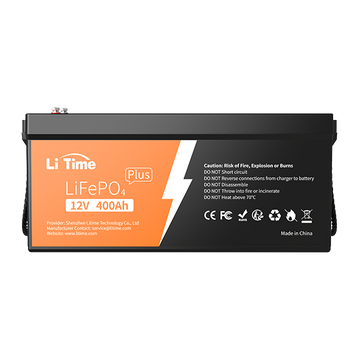
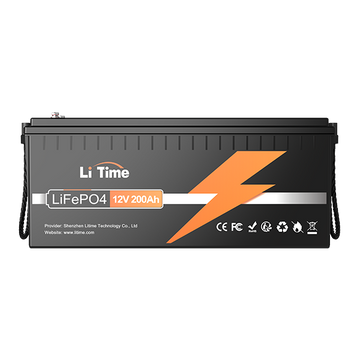
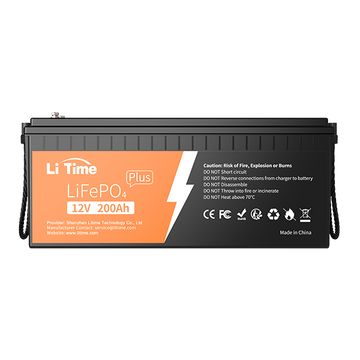
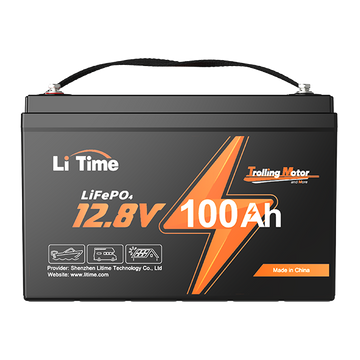
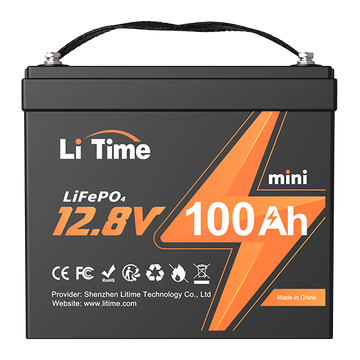
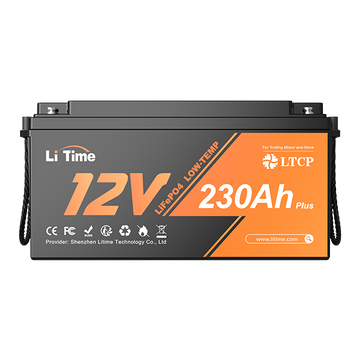
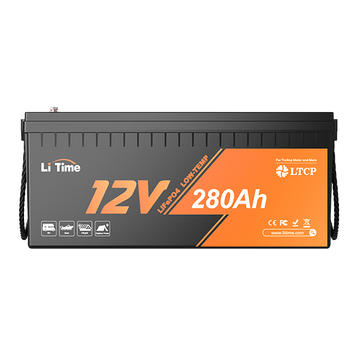
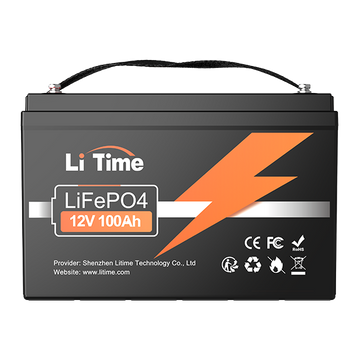
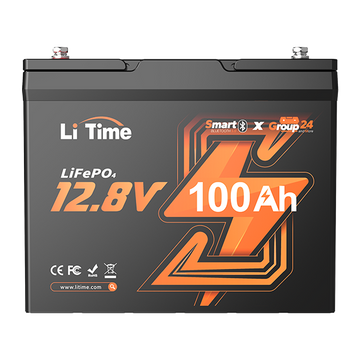
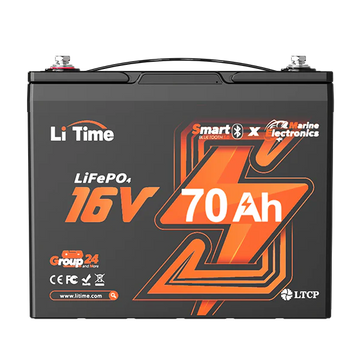
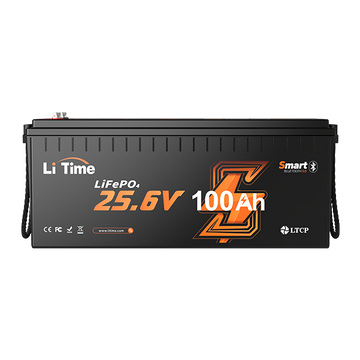
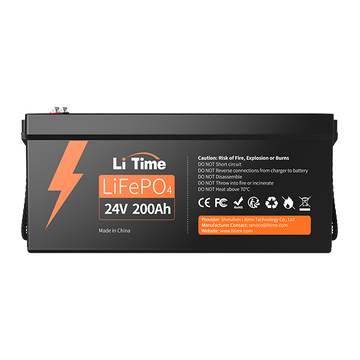
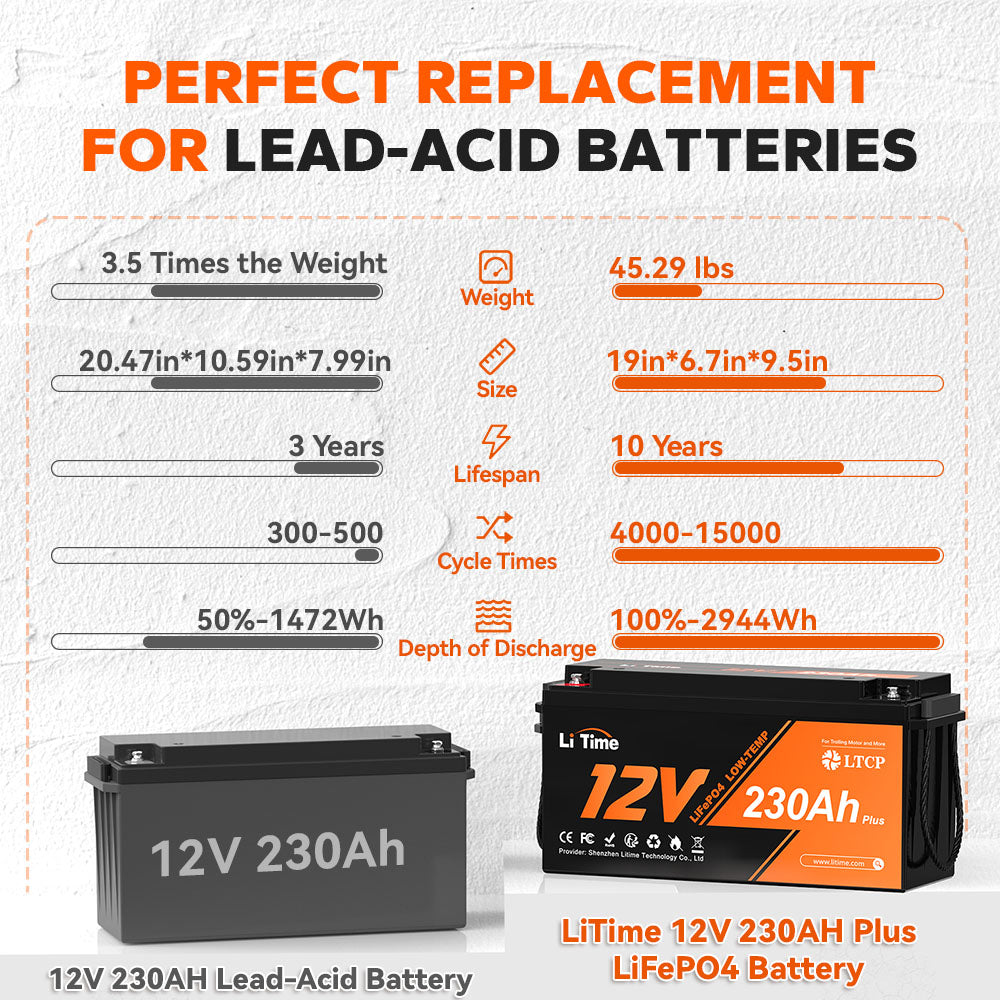
Modern LiFePO₄ lithium batteries—like a LiTime lithium battery—are increasingly replacing lead acid, especially in deep-cycle applications.
| Feature | Lead Acid Battery | LiTime LiFePO₄ Lithium Battery* |
|---|---|---|
| Usable capacity | ~50% of rated Ah (to protect lifespan) | 80–100% usable |
| Cycle life (to 80% capacity) | ~300–800 cycles (deep-cycle types) | 4000+ cycles |
| Weight | Heavy for same capacity | About 1/2–1/3 the weight |
| Charging speed | Moderate to slow | Much faster (with suitable charger) |
| Maintenance | Flooded types need water, cleaning | Maintenance-free |
| Efficiency | 70–85% | 95%+ |
| Cost over lifetime | Higher (frequent replacement) | Lower total cost per kWh over service life |
*Typical LiTime LiFePO₄ performance; check specific model datasheets for exact specs.
When Lithium Makes Sense
When Lithium Makes Sense (One Paragraph per Point)
Frequent Use (Daily or Weekly): Lithium batteries are ideal if you use your power system often—such as daily or several times per week—because they handle continuous cycling far better than lead-acid. For full-time RV travelers, liveaboard boaters, or off-grid cabin users who run appliances like lights, fans, fridges, and electronics every day, lithium delivers consistent performance and lasts significantly longer under heavy, frequent use.
Deep Discharge Cycles: If your system regularly drains below 50% state of charge, lithium is a far better fit because it safely delivers 80–100% of its capacity without severe damage. For setups where loads like fridges, pumps, and inverters pull batteries down overnight, lithium provides much more usable energy and maintains healthy cycle life, avoiding the premature wear common in deeply discharged lead-acid batteries.
Weight or Space Limitations: Lithium makes sense in situations where weight and compactness matter—such as 4×4 overlanding, camper trailers, caravans, and small boats. A lithium battery can provide equal or greater usable energy at roughly half the weight and far smaller volume than lead-acid, making it easier to install, safer to transport, and better for payload-restricted vehicles.
Solar-Heavy or Fast-Charging Systems: Lithium is ideal if you rely primarily on solar panels, alternator charging, or need quick top-ups. These batteries accept higher charge currents, reach full capacity faster, and operate at high efficiency (around 95%), which maximizes the energy you get from solar or driving. This is especially important for off-grid campers or boaters who cannot afford long generator or engine run times.
Long-Term Value Over Upfront Cost: If you value long-term savings rather than the cheapest initial purchase, lithium is the more economical choice. While lead-acid batteries often need replacement every 2–4 years, lithium packs commonly offer 2,000–5,000+ cycles and can last 10 years or more. This dramatically lowers the total cost per year and per kilowatt-hour of use, making lithium the smarter financial investment for long-term or heavy use.
Low Maintenance and Cleaner Installationsv: Lithium batteries make sense when you want a maintenance-free, clean, and safe power system. They eliminate the need for watering, corrosion cleanup, and ventilation required by flooded lead-acid batteries. With no acid spills or off-gassing and a fully sealed design, lithium is better suited for indoor installations, tight compartments, and modern mobile power systems where simplicity and reliability matter most.
Then upgrading from a deep cycle lead acid battery bank to a LiTime lithium battery can dramatically increase usable energy, reduce replacement frequency, and cut total cost of ownership.

4. Lead Acid Battery Common Applications
Lead-acid batteries remain widely used across many industries because they are affordable, reliable, and capable of delivering high surge currents or steady deep-cycle power depending on the design. Below are the most common real-world applications and why lead-acid technology is suited to each scenario.
4.1 Car Starter Battery
Lead-acid batteries are the standard choice for automotive starter batteries because they deliver the high burst of current needed to crank an engine. Their ability to provide strong cold-cranking amps (CCA), tolerate brief high-load demands, and recharge quickly from the vehicle’s alternator makes them ideal for cars, trucks, and motorcycles. Most of these are flooded lead-acid or AGM designs engineered for short, powerful discharge rather than deep cycling.
4.2 Solar Energy Storage
Deep-cycle lead-acid batteries have long been used in solar and off-grid energy systems thanks to their low cost and predictable performance. They are capable of handling regular charge/discharge cycles and provide stable DC power for solar inverters, charge controllers, and household loads. Although lithium is increasingly preferred for efficiency and lifespan, lead-acid remains popular in budget-friendly solar setups, remote telecom sites, and backup energy banks where cost is the primary concern.
4.3 UPS Backup
Sealed lead-acid (SLA) and valve regulated lead-acid (VRLA) batteries—such as AGM and gel types—are widely used in uninterruptible power supply (UPS) systems. Their sealed design, low maintenance requirements, and reliable standby performance make them ideal for data centers, medical equipment, emergency lighting, and critical infrastructure. They remain the most cost-effective solution for short-duration, high-power backup applications.
4.4 RV/Marine
AGM and deep-cycle lead-acid batteries are commonly found in RVs and marine environments because they provide steady power for onboard systems such as lighting, pumps, refrigeration, and inverters. Their durability, availability, and relatively low upfront cost make them suitable for casual campers or boaters. While many RV and marine users are upgrading to lithium for weight savings and longer cycle life, lead-acid batteries are still widely used when budget is the priority or when only moderate cycling is required.
4.5 Wheelchairs & Mobility
Mobility scooters, powered wheelchairs, and medical mobility devices frequently use sealed lead-acid batteries due to their safety, reliability, and maintenance-free operation. SLA and gel batteries are chosen because they do not spill, require no watering, and can be used safely indoors. Their compatibility with existing chargers and established reliability in medical applications make them a longstanding standard in the mobility sector.
In many of these roles—especially solar, RV, and marine—LiTime LiFePO₄ packs are now a popular drop-in upgrade for traditional lead acid batteries thanks to better cycle life and weight savings.
5. How to Choose the Right Lead Acid Battery
Lead Acid Battery Key Specifications
When choosing or evaluating lead acid batteries, you’ll often see:
- Voltage (V) – Most common are 6 V, 12 V and 24 V.
- Capacity (Ah) – Ampere-hours, indicating how much current the battery can deliver over time.
- Cold Cranking Amps (CCA) – For starter batteries; how much current they can supply in cold conditions.
- Reserve Capacity (RC) – How long the battery can deliver a small load before dropping to a cutoff voltage.
- Cycle life – Number of charge/discharge cycles before capacity falls (deep-cycle types last longer).
- Recommended Depth of Discharge (DoD) – How much of the battery’s capacity you can safely use regularly.
Lead Acid Battery Voltage Chart
State of charge is often estimated by open-circuit voltage after the battery rests. Below is a simplified lead acid battery voltage chart for a 12 V battery at 25°C:
| State of Charge | Voltage (12 V lead acid battery) |
|---|---|
| 100% | 12.7 – 12.8 V |
| 75% | ~12.4 V |
| 50% | ~12.1 V |
| 25% | ~11.8 V |
| 0% (fully discharged) | ≤11.6 V |
Note: Under load, voltage will read lower. Long-term use below ~50% SoC shortens lifespan for most standard lead acid batteries.
Choose the Right Lead Acid Battery Keys
When you do want or need a lead acid option, follow these steps:
1.Define the application: Starting vs. deep cycling vs. standby backup.
2.Choose the construction type
- Flooded for low cost and easy maintenance access.
- Sealed lead acid battery (AGM or Gel) for maintenance-free, indoor, or sensitive environments.
- Deep cycle lead acid battery for repeated discharge in solar, RV, or marine use.
3.Size the capacity (Ah): Estimate daily energy use (Wh) and convert to Ah. Remember you should usually use only about 50% of the battery’s rated capacity to preserve life.
4.Check voltage compatibility: Match system voltage: 12 V, 24 V, or 48 V.
5.Review charge requirements: Make sure your charger or solar controller supports the correct charge profile for your battery type.
Tip: If the system is heavily cycled or weight is a problem, price out a LiTime LiFePO₄ lithium battery bank as an alternative—you may find it cheaper over 3–5 years than repeatedly replacing lead acid batteries.
6. Lead Acid Battery Maintenance & Safety
Choosing the right lead-acid battery requires understanding your power needs, the environment in which the battery will operate, and the performance characteristics of each battery type. The goal is to match the battery’s design with the specific demands of your application so you get the best balance of cost, lifespan, and reliability.
6.1. Identify Your Application First
Lead-acid batteries are built for different purposes, so choosing based on application is the most important step.
- Starting / Cranking: Cars, trucks, motorcycles — needs high burst current → Starting (FLA or AGM)
- Deep-Cycle Loads: Solar systems, RV house loads, marine appliances — needs stable, repeated discharge → Deep cycle FLA, AGM, or Gel
- Standby / Backup: UPS, alarm systems, emergency lighting — needs reliability & low maintenance → Sealed Lead Acid (SLA/VRLA)
Knowing your application prevents underperformance and premature battery failure.
6.2. Choose the Right Battery Type
Each type of lead-acid battery offers different benefits:
- Flooded Lead Acid (FLA): Lowest cost; needs maintenance; good for automotive and large industrial systems.
- AGM (Absorbent Glass Mat): Maintenance-free; strong starting power; good for RVs, boats, and start-stop vehicles.
- Gel Battery: Excellent deep-cycle performance; slow charge rate; suitable for mobility devices and solar storage.
- Deep Cycle Lead Acid: Designed for regular, deep discharges; ideal for solar, marine house loads, and off-grid systems.
Match the type with how frequently and deeply the battery will be used.
6.3. Size the Capacity (Ah) Correctly
| Battery Type | Absorption / Boost Charge | Float Charge | Notes |
|---|---|---|---|
| Flooded Lead Acid (FLA) | 14.4–14.8 V | 13.2–13.5 V | Can tolerate equalization; requires ventilation |
| AGM (Absorbent Glass Mat) | 14.4–14.6 V | 13.4–13.8 V | Sensitive to overcharge; no equalization |
| Gel Battery | 14.1–14.3 V | 13.5–13.8 V | Must use strict voltage limits to avoid damage |
Capacity determines how long your system can run.
- Calculate total watt-hours of your expected load per day.
- Convert to amp-hours using your system voltage: Ah = Wh / System Voltage
- Remember: Most lead-acid batteries should only be discharged to 50% for optimal lifespan. To maintain battery health, you generally need twice the Ah capacity you intend to use daily.
6.4. Match the Battery Voltage with Your System
Choose the same voltage as your existing system:
- 12 V for vehicles, small solar setups, RV appliances
- 24 V or 48 V for larger inverters and off-grid systems
Mixing voltages can damage equipment, so always match your system design.
6.5. Ensure Compatibility With Your Charger
Lead-acid batteries require proper voltage settings to avoid damage:
- FLA: 14.4–14.8 V bulk charge
- AGM: 14.4–14.6 V (no equalization)
- Gel: 14.1–14.3 V (tight voltage limits)
A mismatched charger can overcharge or undercharge the battery, shortening lifespan.
6.6. Consider Lifespan and Maintenance Requirements
- Flooded batteries need water top-ups, ventilation, and corrosion cleaning.
- AGM and Gel (SLA/VRLA) are maintenance-free.
- Deep-cycle models last longer under heavy cycling but still require proper care. Think about how much maintenance you are realistically willing to handle.
6.7. Evaluate Budget vs. Long-Term Value
Lead-acid batteries are cheaper upfront but may need replacement every 2–5 years depending on use. If you cycle your battery heavily, a lower-cost FLA may become more expensive over time due to frequent replacements. In high-demand applications, upgrading to LiFePO₄ lithium (e.g., LiTime) often becomes more cost-effective in the long term.
6.8. Environmental and Installation Considerations
- Use sealed batteries (AGM/Gel) indoors or in enclosed spaces due to minimal off-gassing.
- Use flooded batteries only in ventilated areas.
- Consider vibration resistance for marine, RV, or off-road environments.
If you prefer a system with minimal maintenance, no acid spills, and higher safety margins, a LiTime lithium battery eliminates watering, venting concerns, and acid corrosion.
7. FAQs About Lead Acid Battery
Q1. How long does a lead acid battery last?
Typically 3–5 years for automotive starter batteries and 2–7 years for deep-cycle models, depending on depth of discharge, temperature, and maintenance.
Q2. Can I replace a lead acid battery with lithium?
Yes, many LiTime LiFePO₄ batteries are designed as drop-in replacements with built-in BMS protection. Just match voltage, check charge settings, and confirm physical fit and wiring.
Q3. Why does my lead acid battery fail early?
Common causes include chronic undercharging, frequent deep discharges below 50%, high temperatures, incorrect charging voltages, or long storage in a discharged state.
Q4. What is a valve regulated lead acid battery?
A valve regulated lead acid battery (VRLA) is a sealed design (AGM or Gel) that includes pressure-relief valves. It recombines most gases internally and requires no water top-ups.
Q5. Where can I find a lead acid battery voltage chart?
Many manufacturers publish charts; a basic lead acid battery voltage chart is included earlier in this article, but always check the datasheet for your specific battery model.
8. Conclusion
Lead acid technology—whether in a traditional flooded design, a sealed lead acid battery, or a deep cycle lead acid battery—remains an important, affordable choice for starting, backup, and some energy-storage systems. Understanding types, specifications, and voltage behavior helps you select and maintain the right battery for your needs.
However, for modern off-grid, RV, marine, and solar users who demand long life, high usable capacity, and low weight, upgrading from a conventional lead acid battery bank to a LiTime lithium ion battery can deliver quieter operation, faster charging, and lower lifetime cost.