






Understanding how to charge lithium ion systems safely is essential for maximizing both performance and lifespan. Lithium-ion chemistry is highly efficient, but also sensitive to over-voltage, high current, and extreme temperatures—making proper charging techniques crucial.
This guide explains the science behind how to charge lithium ion battery, recommended voltages and currents, safe charging practices, and tips to get the longest possible life from your battery—ensuring reliable, efficient, and hazard-free operation in any application.
- 1.What Is a Lithium Ion Battery and Basic of Charging
- 2.Why Proper Charging Is Important?
- 3.Lithium Ion Battery Charging Voltage & Current
- 4.How to Charge a Lithium Ion Battery?
- 5.Charging a Lithium Ion Battery Tips
- 6.Extend Lithium Ion Battery Lifespan By Charging
- 7.FAQs About Charging Lithium Ion Battery
- Conclution
1. What Is a Lithium Ion Battery and Basic of Charging
1.1 Lithium-ion chemistry explanation
A lithium-ion battery stores energy by moving lithium ions between two electrodes:
- Anode (negative) – usually graphite
- Cathode (positive) – made from a lithium metal oxide (e.g., NMC, LFP)
- Electrolyte – carries lithium ions between the electrodes
- Separator & casing – keep everything safe and isolated
During discharge, lithium ions move from anode to cathode, releasing electrical energy. During charging, an external power source pushes the ions back to the anode. Because this chemistry is sensitive to over-voltage, over-current, and temperature, the charging method is more controlled than for older chemistries like lead acid.
1.2 What is CC/CV charging?
When people ask how to charge lithium ion battery correctly, the core answer is: use a CC/CV (Constant Current / Constant Voltage) charging profile.
- Constant Current (CC):The charger delivers a fixed current (e.g., 0.5C, where C = battery Ah rating).Voltage slowly rises as the battery fills.
- Constant Voltage (CV):Once the set charge voltage is reached (e.g., 4.2 V per cell for standard Li-ion), the charger holds that voltage.Current gradually tapers down as the battery reaches full charge.
Charging stops when the current falls below a small threshold (often 0.05C–0.1C), or when a timer/BMS cut-off is reached.
1.3 Charging curve explained

A typical lithium-ion charging curve looks like this:
- Stage 1 – CC:Voltage rises from its discharged level toward the maximum (e.g., 3.0 → 4.2 V), current stays roughly constant.
- Stage 2 – CV:Voltage is held at the maximum safe level, while current decreases toward zero.
- Full:When current is low enough and voltage stable, the battery is considered 100% charged.
This curve is why you’ll often notice devices charge quickly from 0–60% and more slowly from 80–100%.
2. Why Proper Charging Is Important?
Proper charging matters because it directly affects safety, lifespan, and performance of any lithium ion battery.
- Safety:Lithium cells are sensitive to over-voltage, over-current, and high temperature. If you don’t follow the correct method for how to charge lithium ion battery (proper CC/CV profile, right charger, safe temperature range), the cell can overheat, swell, vent gas, or in extreme cases catch fire.
- Lifespan & capacity:Regularly overcharging, charging too fast, or charging in very hot or very cold conditions accelerates chemical degradation inside the cell. That means the battery loses capacity more quickly and reaches end-of-life in a fraction of its rated cycle count.
- Performance & runtime:Correct charging ensures the battery actually reaches a healthy full charge without being stressed. You get maximum usable energy, stable voltage, and predictable runtime for devices like phones, e-bikes, RV systems, or power stations.
- Cost & reliability:A well-charged pack lasts years longer, which reduces replacement cost and keeps critical systems (UPS, solar storage, marine/RV power) reliable. Following proper charging guidelines protects your investment—especially for larger packs such as 12 V lithium batteries used in off-grid setups.
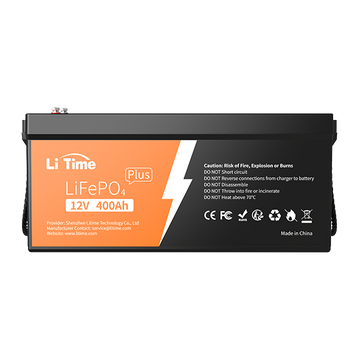
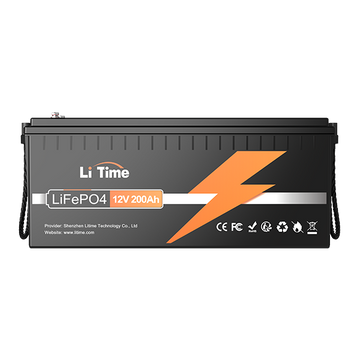
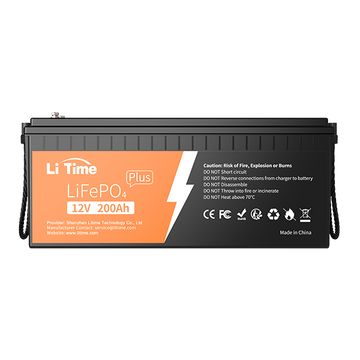
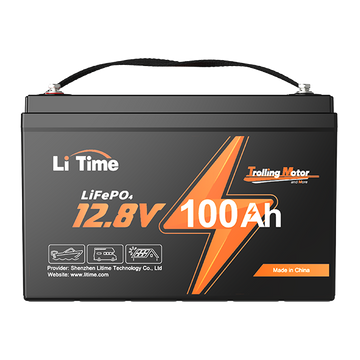
High-quality packs like LiTime lithium battery products include a built-in BMS (Battery Management System) to enforce safe voltage, current, and temperature limits, making correct charging easier and safer.
3. Lithium Ion Battery Charging Voltage & Current
To understand how to charge a 3.7 V lithium ion battery or a 12 V lithium ion battery, you need the correct per-cell charge voltage and typical current range.Below is a simplified table for common lithium-ion configurations :
| Battery Type & Scenario | Nominal Voltage | Standard Charge Voltage (CV)¹ | Recommended Charge Current (CC)² | Typical Uses |
|---|---|---|---|---|
| Small consumer Li-ion (single-cell) | 3.6–3.7 V | 4.20 V | 0.2C–0.5C | Phones, cameras, power banks |
| 3.7 V Li-ion cell for DIY / flashlights | 3.6–3.7 V | 4.20 V | 0.2C–1C³ | Flashlights, DIY packs, tools |
| 12 V “Li-ion” pack (energy-dense NMC/NCA etc.) | 10.8–11.1 V | 12.60 V | 0.2C–0.5C | Portable speakers, small UPS, RC |
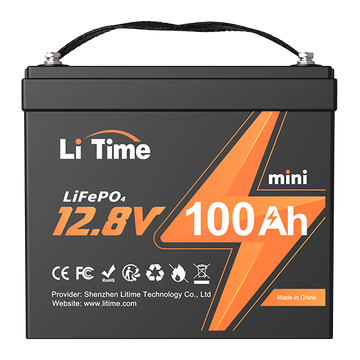
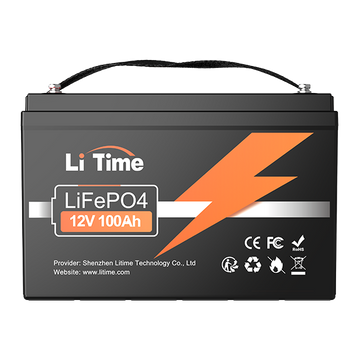
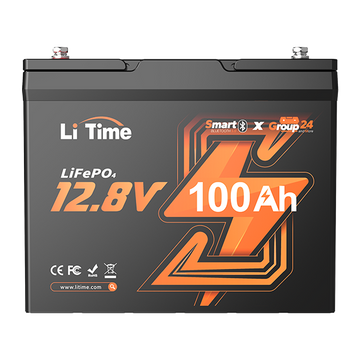
| LiTime 12.8 V LiFePO₄ deep-cycle battery | 12.8 V | 14.4–14.6 V | 0.2C–0.5C | RV / camper, small solar, fish finder |
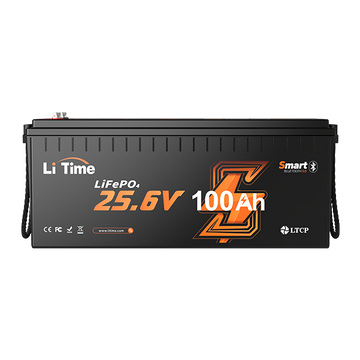
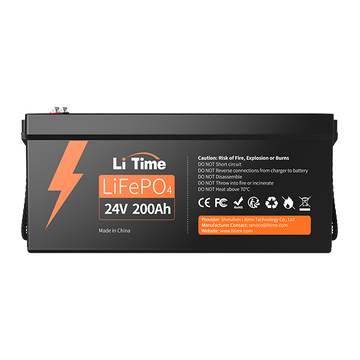
| LiTime 24 V LiFePO₄ battery | 25.6 V | 28.8–29.2 V | 0.2C–0.5C | Larger RV, marine, off-grid solar |
| LiTime 48 V LiFePO₄ battery | 48–51.2 V | 54.0–58.4 V | 0.2C–0.5C | Home backup, solar storage, telecom |
4.How to Charge a Lithium Ion Battery?
To know how to charge lithium ion battery,you must learn the following Charging Lithium Ion Battery methods and steps.
4.1 Charging Lithium Ion Battery methods
Common ways to charge lithium-ion batteries include:
- Dedicated lithium-ion charger:A dedicated lithium-ion charger is the safest and most accurate way to charge a pack because it’s designed to follow the correct CC/CV profile and voltage for that chemistry and cell count. You simply match the charger to the battery (e.g., 4.2 V for a 3.7 V cell, 12.6 V for a 3S pack), connect it, and let the charger handle the constant-current then constant-voltage stages until it automatically stops at full.
- Built-in device charging:For phones, laptops, tablets, and many modern devices, charging is managed internally by the device’s own circuitry and BMS, so you just plug in the approved USB/USB-C/power adapter. The device regulates voltage and current, optimizes battery health, and stops charging when full, which makes this the easiest method for users who don’t need to think about detailed charging parameters.
- Solar charging:Solar charging uses panels connected to a solar charge controller that supports lithium or LiFePO₄ profiles, converting variable solar output into a proper CC/CV charge. This method is ideal for RV, marine, and off-grid systems, but it’s critical that the controller is set to the correct battery type and voltage to avoid overcharging or undercharging as sunlight intensity changes throughout the day.
- Charging power banks / portable power stations:Power banks and portable power stations contain their own lithium packs, BMS, and charging electronics, so you just connect them to AC, USB-C, or solar inputs as specified by the manufacturer. Internally, the device takes care of voltage, current, and protection limits, making this method very user-friendly while still following the same CC/CV principles used for individual lithium-ion batteries.
If you’re wondering how to charge lithium ion battery bank in an RV or boat, the safest option is a lithium-compatible charger or a LiFePO₄-specific solar/DC–DC charger—exactly what many LiTime batteries are designed to work with.
4.2 Charging Lithium Ion Battery steps
Below is a generic step-by-step guide. Always follow your device/battery manual first.
1.Identify your battery type and specs:Confirm chemistry (Li-ion vs LiFePO₄), nominal voltage, and Ah capacity.
2.Choose a compatible charger:Voltage must match the pack’s recommended charge voltage.Current should be at or below the recommended C-rate.
3.Connect charger to battery or device:For standalone packs, connect positive to positive (+) and negative to negative (–).For devices (phones, laptops, power stations), plug in the manufacturer’s adapter or a certified equivalent.
4.Start charging in a safe environment:Place the battery on a non-flammable surface, away from flammable materials.Ensure adequate ventilation.
5.Monitor charging progress:Check that the battery is not excessively hot or swollen.Most smart chargers show charging stage or LED indicators (charging / full).
6.Stop charging when full:The charger or BMS should cut off automatically.Unplug the charger rather than leaving it connected for days.
5. Charging a Lithium Ion Battery Tips
5.1 Charging in cold (0°C and below)
Charging a lithium-ion battery in cold conditions requires extra caution because temperatures below 0°C (32°F) can cause lithium plating, permanent capacity loss, and even internal short circuits. Here’s the correct, detailed way to do it safely:
- Warm the Battery Above 0°C Before Charging:Lithium-ion batteries must not be charged below freezing.Safe charging temperature range is typically:
- 0°C to 45°C (32°F to 113°F) for standard Li-ion
- 0°C to 55°C (32°F to 131°F) for some devices
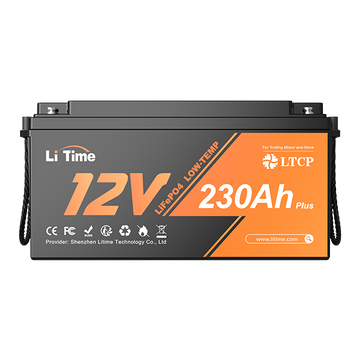
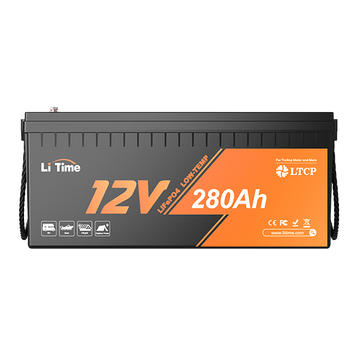
- Use Batteries with Low-Temp BMS:Lithium batteries used in outdoor environments should have a low-temperature charging cutoff or self-heating feature.Like LiTime LiFePO₄include automatic charge shutoff below 0°C,low-temperature protection,optional self-heating (in selected models).These protections allow you to safely operate in winter without damaging the battery.
- Slow-Charge When the Battery Is Just Above Freezing:If the battery is barely above 0°C, use a low current (0.1C–0.2C) to minimize stress.As the battery warms during charging, the current can increase safely.
5.2 Charging in hot environments
High temperatures (typically above 45–50°C / 113–122°F) accelerate aging and can lead to thermal runaway in faulty cells.
- Avoid direct sunlight:Never charge a lithium ion battery in direct sun or places that heat up quickly, like a car dashboard, closed vehicle, or near a window. These spots can push the battery well beyond its safe operating temperature, even if the charger itself is rated for high heat.
- Ensure good ventilation:When charging in hot environments, make sure the battery and charger have plenty of airflow and aren’t covered by blankets, bags, or other objects. Ventilation helps dissipate heat generated during charging and keeps the battery closer to a safe temperature.
- Don’t fast charge when it’s hot:Fast charging already generates extra internal heat, so combining it with a hot ambient temperature is especially stressful for the cells. In hot conditions, it’s better to use a lower charge rate (around 0.2C–0.5C) to reduce thermal stress and extend battery life.
- Use packs with temperature-protection BMS:Batteries that include a built-in Battery Management System (BMS) with over-temperature protection—such as many LiFePO₄ packs like LiTime lithium batteries—will automatically stop or block charging when internal temperatures get too high, adding an extra safety and longevity layer in hot climates.
6. Extend Lithium Ion Battery Lifespan By Charging
How you charge directly influences how long your battery lasts. Here are key lifespan-friendly habits:
- Avoid full 0–100% cycles when possible:To maximize lifespan, it’s best to avoid full 0–100% cycles and instead keep the battery operating in a moderate state-of-charge window. Most lithium-ion cells experience the slowest aging when kept between 20% and 80%, as extreme high or low levels increase internal resistance and accelerate degradation.
- Don’t fast-charge all the time:Quick charging is convenient but generates extra heat; use it sparingly.
- Avoid deep discharges to 0%:avoiding deep discharges below 10–20% helps preserve cycle life,since very low voltage puts strain on the anode and increases the risk of over-discharge.
- Temperature during charging also matters: lithium batteries should ideally be charged at room temperature, as charging in extreme heat or below 0°C accelerates aging or causes permanent damage such as lithium plating.
- Store partially charged:For long-term storage, keep lithium batteries around 40–60% and in a cool, dry environment minimizes stress on the cell chemistry.
If you rely on your battery every day—such as in an RV or off-grid cabin—investing in a high-cycle pack like a LiTime LiFePO₄ off-grid lithium battery can deliver thousands of cycles, much better resistance to deep discharge, and more usable energy per charge than conventional lead-acid or standard Li-ion.
7. FAQs About Charging Lithium Ion Battery
How long does a lithium ion battery take to charge?
The answer depends on battery capacity and charger current. As a rough rule, charge time ≈ Battery Ah ÷ Charge Current (A) plus 30–60 minutes for the CV taper stage. For example, a 10 Ah battery charged at 5 A might take about 2.5–3 hours. Device-level charging (phones, laptops) is also limited by internal electronics and may be slower.
How to fix a lithium ion battery that won't charge?
If a lithium-ion battery won’t charge, safely troubleshoot the charger, temperature, connections, and BMS, and replace the battery immediately if it shows any signs of damage.
Can I leave a lithium battery on the charger overnight?
Most modern devices stop charging when full, but leaving a battery on charge for many days can keep it at 100% and slightly elevated temperature, which accelerates aging. Overnight is usually fine with quality equipment, but for long-term storage, unplug and store around 40–60% charge instead.
Do I need to fully charge a new lithium-ion battery before first use?
No special “8-hour” first charge is required. You can use it out of the box and charge normally. Many people choose to fully charge first just to maximize initial runtime, but it’s not necessary for battery health.
Conclusion
Knowing how to charge lithium ion battery systems correctly is essential for safety, performance, and long service life. Use a proper CC/CV charger, follow the recommended voltage and current for your specific pack, avoid extreme temperatures, and adopt habits that minimize stress on the cells.
For demanding applications like RVs, marine systems, off-grid solar, and backup power, consider upgrading to a high-quality LiTime lithium battery with built-in BMS protection and optimized charging profiles. You’ll get safer operation, faster charging, more usable energy, and a much longer lifespan—all while following the same core charging principles outlined in this guide.