






Searches for lifepo4 solar battery have exploded in the last few years—and for good reason. Solar users are discovering that modern LiFePO4 batteries can store more energy, last far longer, and weigh far less than old lead-acid banks.
In this guide we’ll walk through what LiFePO4 batteries are, how they work in a solar system, what real-world performance and reviews look like, how to size and install them, and which models are among the best choices if you’re shopping for a LiFePO4 solar battery Australia wide.
- 1.What is a LiFePO4 Solar Battery?
- 2.Advantages & Disadvantages of LiFePO4 for Solar
- 3.Are LiFePO4 Solar Batteries Good for Solar Use?
- 4.How to Size a LiFePO4 Solar Battery Bank
- 5.LiFePO4 Solar Battery Price & Affecting Factors
- 6.Best LiFePO4 Solar Battery in Australia
- 7.How to Install and Connect a LiFePO4 Solar Battery
- 8.Conclusion
- 9.FAQs
1.What is a LiFePO4 Solar Battery?
Before we dive into sizing, pricing or installation, it’s important to clearly understand what a LiFePO4 solar battery actually is and why it has become so popular in modern solar systems. In this section we’ll look at the basic concept, how it works inside a solar setup, where it’s commonly used, and how it compares with traditional lead-acid batteries.
1.1 LiFePO4 Solar Battery and Why it matters

A LiFePO4 solar battery is a rechargeable battery that uses lithium iron phosphate (LiFePO₄) as the cathode material and is specifically designed to store energy from solar panels.
LiFePO₄ is one type of lithium-ion chemistry, but compared with other lithium chemistries it is:
- More thermally stable
- Much safer and less prone to thermal runaway
- Capable of very high cycle life
In a solar context, this matters because your battery is charged and discharged every single day. A LiFePO4 solar battery can typically handle thousands of deep cycles with very little capacity loss, which means your system stays reliable for many years. It also maintains a more stable voltage as it discharges, so your lights, fridge and inverter keep working smoothly instead of dimming or cutting out early.
1.2 How Does It Work in a Solar System?

Inside a solar power system, the LiFePO4 battery sits between your solar panels and your loads (DC devices and AC appliances). The basic flow looks like this:
- Solar panels generate DC electricity when the sun is shining.
- This energy passes through a solar charge controller (PWM or MPPT), which regulates voltage and current so the battery is charged safely using a LiFePO4-appropriate profile.
- The LiFePO4 solar battery stores that energy as chemical energy inside its cells.
- When you turn on a device—LED lights, a 12 V fridge, a water pump or an inverter—the battery releases electrical energy to power those loads.
The built-in Battery Management System (BMS) plays a critical role. It constantly monitors:
- Cell voltage
- Temperature
- Charge and discharge current
If anything goes outside the safe range (over-charge, over-discharge, short circuit, high temperature), the BMS will disconnect the battery to protect both the cells and your equipment.
Because LiFePO4 has a very flat voltage curve, the battery voltage stays close to nominal (for example, around 13 V in a 12 V pack) for most of the discharge. This is ideal in a solar system: your inverter sees a stable input, and your DC appliances don’t suffer from brown-outs.
1.3 LiFePO4 Solar Battery Applications
LiFePO4 solar batteries are extremely versatile and appear in many different solar setups. Some of the most common applications include:
-
Off-grid homes and cabins
- Provide the main energy storage bank for roof-mounted solar arrays.
- Allow lights, fridges, internet, tools and entertainment systems to run day and night.
-
Grid-tied homes with backup
- Paired with hybrid inverters to store daytime solar and supply power during evening peaks or grid outages.
-
Caravans, RVs and camper trailers
- Power 12 V fridges, lighting, phone/laptop charging, fans and small inverters.
- Lightweight LiFePO4 packs are ideal here because every kilogram saved improves towing efficiency.
-
4x4 and overlanding rigs
- Used as the “house” or auxiliary battery in a dual-battery system.
- Keeps fridges and accessories running for days while the starter battery remains dedicated to the engine.
-
Boats and marine systems
- Serve as a dedicated house bank for navigation electronics, radios, lights and trolling motors.
- Their resistance to deep cycling and low self-discharge make them excellent for moored vessels.
-
Remote equipment and telecom
- Power pumps, repeaters, cameras and sensors where running grid power is impractical.
Wherever consistent daily cycling, long service life and low maintenance are required, a LiFePO4 solar battery is usually a strong fit.
1.4 LiFePO4 vs Lead-Acid: Key Differences
To appreciate why so many people are switching to LiFePO4, it helps to compare it with the traditional lead-acid batteries (flooded, AGM, GEL) that have been used in solar systems for decades.
1. Cycle Life
- Lead-acid: Typically 300–800 cycles at 50% depth of discharge.
- LiFePO4: Commonly 3000–6000+ cycles at 80–100% depth of discharge.
This means a LiFePO4 battery can last 5–10 times longer under similar conditions.
2. Usable Capacity
- Lead-acid batteries suffer if regularly discharged below ~50% of their rated Ah.
- LiFePO4 can comfortably use 80–100% of its rated capacity without major damage.
So a 100 Ah LiFePO4 often delivers more than double the usable energy of a 100 Ah lead-acid battery.
3. Weight and Size
- Lead-acid batteries are heavy and bulky.
- LiFePO4 offers much higher energy density, often weighing about half as much for the same usable energy.
This difference is critical in mobile applications like caravans and 4x4s.
4. Voltage Behavior and Efficiency
- Lead-acid voltage sags significantly as they discharge, which can cause inverters to shut down early and fridges to misbehave.
- LiFePO4 maintains a flatter voltage curve, so your system sees stable input almost until the battery is nearly empty.
- Charge/discharge efficiency is also higher (often over 95% for LiFePO4 vs ~80–85% for lead-acid), so more of your solar energy ends up stored and usable.
5. Maintenance and Safety
- Flooded lead-acid requires topping up water and careful ventilation due to gas emission.
- LiFePO4 is sealed, maintenance-free and does not off-gas in normal operation.
- Chemically, LiFePO4 is far more stable than many other lithium chemistries, with a very low risk of thermal runaway when used as specified.
The main downsides of LiFePO4 compared with lead-acid are its higher upfront cost and stricter charging requirements (needs an appropriate charge profile and should not be charged below 0 °C without protection). However, when you spread the cost over the much longer lifespan and higher usable energy, LiFePO4 usually wins on total cost of ownership—especially in solar systems that cycle every day.
2.Advantages & Disadvantages of LiFePO4 for Solar
Before you decide whether to build your solar system around a LiFePO4 solar battery, it helps to look honestly at both sides of the equation. LiFePO₄ brings some serious benefits over traditional lead-acid, but it also has a few limitations you should know about.
Advantages
- Very long life: Thousands of cycles, much more than lead-acid.
- More usable energy: You can safely use 80–90% of the capacity.
- Light and compact: About half the weight for the same usable Ah.
- Efficient and stable: High charge/discharge efficiency and steady voltage, great for inverters and fridges.
- Low maintenance: Sealed, low self-discharge, built-in BMS for protection.
Disadvantages
- Higher upfront cost: You pay more at the beginning, even though lifetime cost is often lower.
- Needs correct chargers: Solar controllers and chargers must support LiFePO4 settings.
- Cold-charge limits: Shouldn’t be charged below 0 °C unless the battery has low-temp protection.
- Doesn’t like extreme heat: Avoid very hot, poorly ventilated locations such as engine bays.
3.Are LiFePO4 Solar Batteries Good for Solar Use?
To answer that, it helps to look at three angles: objective lab specs, what everyday users say, and the situations where LiFePO₄ might not be ideal.
3.1 Lab Performance & Specs
From a technical point of view, LiFePO₄ is almost tailor-made for solar storage:
- Cycle life:Good LiFePO₄ batteries are rated for 3000–6000+ cycles, even at deep discharge levels. For a system cycled once per day, that’s roughly 8–15 years of use. Lead-acid usually manages only a few hundred deep cycles before losing a lot of capacity.
- Depth of discharge and usable capacity:LiFePO₄ can safely use around 80–100% of its capacity. A 100 Ah pack effectively gives you 80–100 Ah usable. By contrast, a 100 Ah lead-acid battery is usually limited to about 50 Ah usable if you want decent life.
- Efficiency:Charge and discharge efficiency often exceeds 95%. That means more of the energy from your solar panels actually ends up stored instead of lost as heat. For small systems with limited panel area, this is a big deal.
- Voltage curve:LiFePO₄ holds a flat voltage over most of the discharge curve (for a 12 V pack, often around 13.0–12.8 V until it’s quite low). This stable voltage keeps fridges, water pumps and inverters running smoothly without early low-voltage cut-outs.
- High current capability:Many LiFePO₄ solar batteries can deliver high continuous current, supporting large inverters and surge loads (coffee machines, microwaves, power tools) that would strain a lead-acid bank of the same Ah rating.
- Safety and BMS protection:The chemistry is inherently stable and, when combined with a built-in Battery Management System, offers strong protection against over-charge, over-discharge and short circuits—critical for unattended solar systems.
3.2 User Reviews & Common Feedback
Technical specs are important, but real-world experience is what most people care about when reading LiFePO4 solar battery reviews. Common feedback from users who switch from AGM or flooded lead-acid to LiFePO₄ includes:
- “Same capacity, more runtime”:People notice that a 100 Ah LiFePO₄ battery runs their fridge and lights much longer than their old 100 Ah AGM. This makes sense because they’re now using most of the rated capacity instead of only half.
- “The battery is so much lighter”:Caravan and 4x4 owners are often shocked at how easy it is to lift a LiFePO₄ pack compared to their previous lead-acid bank. Shedding 20–40 kg from a touring rig is a big safety and fuel-efficiency win.
- “Voltage doesn’t sag like before”:Users running inverters or DC fridges often comment that voltage stays high until right near the end of the discharge. Devices don’t dim or turn off as early, and low-voltage alarms are much rarer.
- “Charges faster from solar”:Because LiFePO₄ accepts higher current for longer and doesn’t need long absorption times, users see their batteries reach full charge more often during limited sun hours.
- “Set and forget” reliability:Once correctly installed and programmed, many users report that their LiFePO₄ solar battery simply works day after day with no maintenance—no distilled water top-ups, no equalisation charges, no acid corrosion.
3.3 When LiFePO4 Might Not Be the Best Choice
Despite its strong performance, a LiFePO₄ solar battery isn’t perfect for every scenario. It may not be the best choice when:
- Budget is very limited:You only use power occasionally (e.g. a light and phone charger a few weekends a year), so a cheap lead-acid battery is cheaper in the short term.
- Chargers can’t be adjusted:Old or basic solar/AC chargers don’t support LiFePO₄ settings, so you risk under- or over-charging unless you upgrade the equipment.
- System is in extreme cold with no protection:Standard LiFePO₄ shouldn’t be charged below 0 °C. In freezing cabins or sheds, you need low-temp protection or another chemistry.
- Battery must live in a very hot, tight space:Engine bays and unventilated boxes get too hot and shorten battery life, so relocation or a cheaper “sacrificial” battery may make more sense.
- Loads are very small or simple:For tiny systems (garden light, small pump), LiFePO₄’s extra cost and complexity are unnecessary.
4.How to Size a LiFePO4 Solar Battery Bank
Choosing the right size LiFePO4 solar battery bank is one of the most important steps in designing a reliable solar system. Too small, and you’ll hit low-voltage cut-off every night; too large, and you may overspend on capacity you rarely use. A simple, step-by-step calculation helps you find the sweet spot.
Step 1: List All Your Loads
Start by listing everything your system will power, both DC and AC (via inverter):
- 12 V fridge or freezer
- LED lights (inside, outside)
- Water pump or fans
- Router, TV, stereo
- Phone, tablet, laptop chargers
- Coffee machine, microwave or other appliances via inverter
Step 2: Calculate Daily Energy Use (Ah or Wh)
Convert each device to amp-hours per day:
- Amps ≈ Watts ÷ System Voltage (e.g. 12 V, 24 V)
- Ah per day = Amps × hours of use
- Wh per day = Watts × hours, or Ah × system voltage
Step 3: Decide How Many Days of Autonomy You Want
“Days of autonomy” means how many days you want to run your system with little or no sun.Common choices:
- 1 day – weekenders who usually move or get sun each day
- 2 days – more comfortable for off-grid camping or bad weather
- 3+ days – off-grid homes, remote cabins, critical loads
Step 4: Adjust for Usable Capacity (LiFePO4 DoD)
One big benefit of LiFePO4 is high usable depth of discharge (DoD). To be conservative, assume you regularly use up to 80% of the rated capacity:
Required battery Ah ≈ (Total Ah needed) ÷ 0.8
Step 5: Consider Inverter Size and Peak Loads
If you use an inverter, especially for high-power appliances, check:
- Inverter continuous rating (W)
- Surge rating (W)
- Battery BMS continuous and peak current limits
Rough guide for 12 V systems:Inverter current (A) ≈ Inverter watts ÷ 10 (allowing for efficiency)
Step 6: Choose Voltage and Bank Configuration
- 12 V LiFePO4 is common in caravans, RVs, 4x4s and small cabins.
- 24 V or 48 V banks are more efficient for big inverters and long cable runs.
Step 7: Factor in Solar Input
Finally, make sure your panel array can realistically recharge the bank:
- Aim for enough solar to replace at least your daily usage in a typical day of sun.
- In cloudy climates or winter, consider extra panel capacity to keep up.
If your panels only provide half your daily consumption on an average day, even a perfectly sized battery bank will slowly run down.
5.LiFePO4 Solar Battery Price & Affecting Factors
When you start shopping lifepo4 solar battery Australia options, you’ll notice a wide price range. Key factors include:
- Capacity and voltage – More Ah and higher system voltage (24/48 V) naturally cost more.
- BMS rating – Batteries with 150–200 A BMS for big inverters are more expensive than 100 A units.
- Cycle life & warranty – Quality brands like LiTime advertise 4000+ cycles and long warranties, which you’re paying for upfront but saving over the life of the system.
- Certifications & safety testing – Standards like UL1973, CE, UN38.3 add cost but also ensure safer, more reliable packs.
- Features – Bluetooth monitoring, smart BMS, low-temp cut-off, metal cases, etc.
- Shipping & local stock – Buying from a local warehouse like LiTime AU reduces freight costs and delivery time.
Rather than chasing the absolute cheapest option, look at cost per kWh over the lifetime (price ÷ usable kWh ÷ cycle count). LiFePO4 often ends up cheaper than AGM when you do this math.
6.Best LiFePO4 Solar Battery in Australia
“Best” depends on your use case, but here are some standout LiTime LiFePO4 lithium ion battery options for common scenarios in Australia:
For caravans, RVs and 4WDs
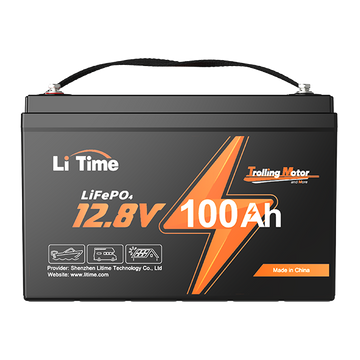
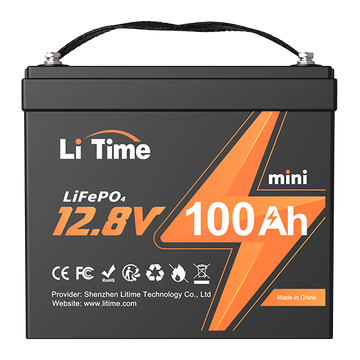
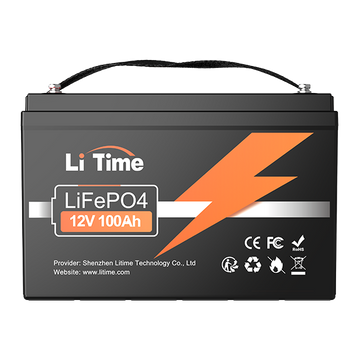
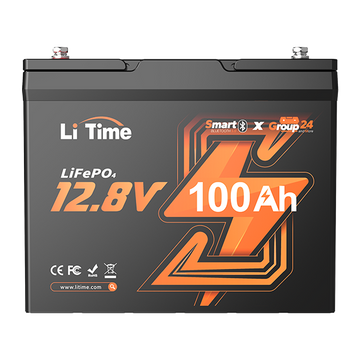
- LiTime 12 V 100 Ah LiFePO4 – 1280 Wh of energy, 4000+ cycles at 100% DoD, about a 10-year lifespan. Ideal for fridges, lights and small inverters in mobile rigs.
For mid-size off-grid or bigger inverters
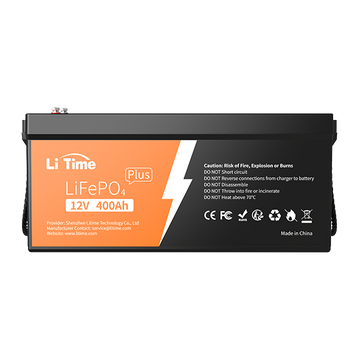
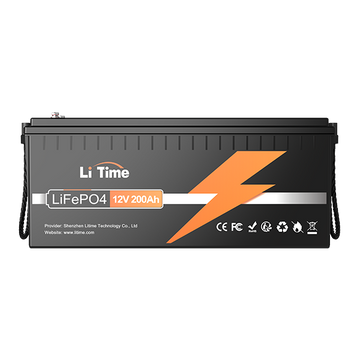
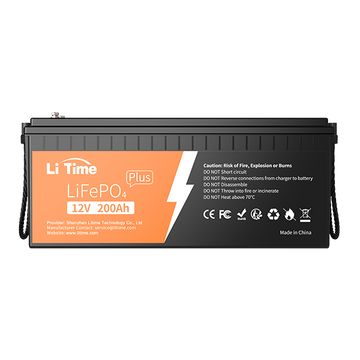
- LiTime 12 V 200 Ahor 200 Ah PLUS (200 A BMS) – Double the capacity and high discharge capability for 2000 W+ inverters, cabin power and backup systems.
For large solar banks and cold climates
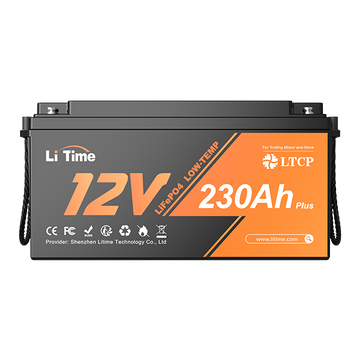
- LiTime 12 V 230 Ah with low-temp cut-off – Can be scaled up to ~47 kWh in 4P4S configuration, perfect for serious off-grid homes or sheds, and includes protection against charging in freezing conditions.
For 24 V marine and RV systems
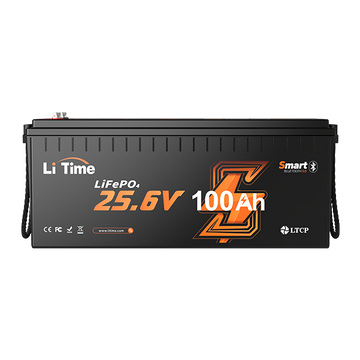
- LiTime 24 V 100 Ah Smart Battery (Bluetooth) – Over 4000 cycles at 100% DoD, low-temp charge protection, EV-grade cells and easy drop-in installation for 24 V systems.
You can browse LiTime’s dedicated off-grid solar battery collection for more capacity options tailored to home backup and solar storage.
7.How to Install and Connect a LiFePO4 Solar Battery
Once you’ve chosen the right LiFePO4 solar battery and sized your bank correctly, the next step is installing and wiring it safely.Below we’ll walk through a simple wiring layout, the right charge controller settings for LiFePO4, and the most important safety tips and mistakes to avoid.
7.1 Basic Wiring Diagram
Every system is a bit different, but most LiFePO4 solar setups follow the same basic structure:
- Solar panels
- Solar charge controller (PWM or MPPT)
- LiFePO4 battery (or battery bank)
- DC loads and/or inverter
If you were to sketch it, it would look like this:

Panels → Charge Controller → LiFePO4 Battery → DC Fuse Box & Inverter → Loads
7.2 Charge Controller Settings for LiFePO4
Exact values vary by manufacturer, but typical 12 V LiFePO4 settings are:
- Bulk/absorption voltage: around 14.2–14.6 V
- Float voltage: 13.4 V or float disabled (many LiFePO4 prefer little or no float)
- Absorption time: relatively short (e.g., 15–30 min) since LiFePO4 doesn’t need long “topping” like lead-acid
- Low-voltage disconnect for loads: around 11.0–11.2 V (or as recommended by the battery’s BMS documentation)
For 24 V or 48 V systems, these numbers are simply doubled or quadrupled. Always check LiTime’s spec sheet for your specific model to confirm recommended charging voltages.
7.3 Safety Tips and Common Mistakes to Avoid
- Fuse everything: Install a main fuse within 20–30 cm of each battery positive terminal.
- Use correct cable size: Undersized cables cause voltage drop and heat—bad for both performance and safety.
- Avoid engine-bay mounting: Keep LiFePO4 batteries out of high-temperature spaces unless they are explicitly rated for it.
- Respect low-temperature limits: Don’t charge below 0 °C unless the battery has built-in low-temp protection.
- Do not mix chemistries or random brands: Don’t parallel lead-acid with LiFePO4, and avoid mixing LiFePO4 brands in one bank because of different BMS behavior.
- Secure the battery well: Especially in caravans, 4WDs and boats—vibration and movement can damage cables and terminals.
8.Conclusion
So, is a LiFePO4 solar battery worth it? For the vast majority of solar energy users—from homeowners seeking energy independence to serious off-grid adventurers—the answer is a resounding yes.
By understanding your energy needs, sizing your system correctly, and choosing a reputable brand like LiTime, you can confidently invest in a LiFePO4 battery bank that will provide clean, reliable power for well over a decade, making your solar journey more effective and hassle-free.
9.FAQs
How long does a LiFePO4 solar battery last?
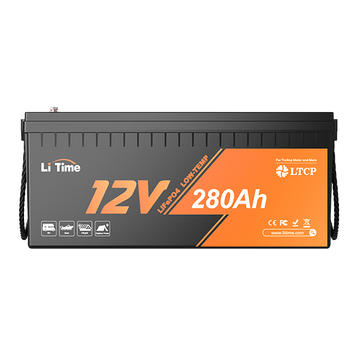
Many LiFePO4 packs are rated for 3000–6000+ cycles. LiTime’s 12 V 280 Ah battery, for example, offers 4000+ cycles at 100% DoD and a design life of around 10 years under normal use.
Can I replace my AGM bank with a LiFePO4 battery in the same system?
Often yes, but you must ensure your solar charge controller and any AC chargers can be configured to LiFePO4 voltage set-points. Check the manual for compatibility, and update low-voltage cut-off to match LiFePO4 recommendations.
Do LiFePO4 batteries require special solar charge controllers?
Yes. You need an MPPT or PWM charge controller that has a dedicated "LiFePO4" charging profile or allows for custom voltage setting. Using lead-acid settings will severely undercharge or damage the battery.