






Modern vehicles and mobile power systems depend on reliable electricity.An auxiliary battery, also known as a secondary battery, provides additional power beyond the main battery.It helps run electronics, accessories, and control systems without draining the starter battery.
Auxiliary batteries are widely used in vehicles, RVs, boats, and off-grid setups.They improve system stability and reduce the risk of power failure.When an auxiliary battery malfunction occurs, understanding the system becomes even more important.
This guide explains how auxiliary batteries work, where they are used, and how to choose the right one.It also covers common problems and practical solutions for modern auxiliary battery systems.
- 1. What Is an Auxiliary Battery?
- 2. How Does an Auxiliary Battery Work?
- 3. Common Uses of an Auxiliary Battery
- 4. Auxiliary Battery Malfunction: Causes and Symptoms
- 5. How to Choose the Right Auxiliary Battery
- 6. LiTime Auxiliary Battery Solutions for RV and Camping
- 7. How to charge auxiliary battery while driving
- 8. Frequently Asked Questions About Auxiliary Batteries
- 9. Conclusion
What Is an Auxiliary Battery?
An auxiliary battery is a secondary power source installed alongside a main battery in a vehicle or energy system. Its function is to supply electricity to accessories and critical systems without draining the starter battery. By isolating accessory loads from engine-starting duties, auxiliary batteries help prevent power shortages and system instability.

Auxiliary batteries are commonly used in vehicles, RVs, boats, and off-grid power setups. In practical terms, the main battery is responsible for starting the engine, while the auxiliary battery powers additional loads such as lighting, electronics, appliances, and control modules. This separation not only extends battery life but also improves overall system efficiency and reliability.
Auxiliary Battery vs Main Battery
The main, or starting, battery is designed to deliver a large amount of current over a very short period. Its internal structure is optimized for engine ignition rather than sustained power delivery. Using a starting battery to power accessories for long periods can significantly shorten its lifespan.
An auxiliary battery, by contrast, is built to handle longer and deeper discharge cycles. It provides steady power over extended periods without damage. Many modern vehicles rely on this division of labor. For example, Mercedes-Benz models use auxiliary batteries to support start-stop systems, ensuring infotainment, safety features, and onboard electronics remain operational even when the engine shuts off at traffic lights.
Why Auxiliary Batteries Are Important
Auxiliary batteries play a critical role in preventing unexpected power failures. They protect sensitive electronic components from voltage drops that can occur when electrical demand increases or when the engine is off. This protection is especially important in systems with complex electronics.
In RV and camping setups, auxiliary batteries enable off-grid living by powering essential appliances without external power sources. In marine applications, they isolate navigation and communication equipment from propulsion systems, reducing the risk of total power loss. These advantages explain why auxiliary batteries are increasingly adopted across automotive, recreational, and industrial sectors.
How Does an Auxiliary Battery Work?
An auxiliary battery system typically shares charging sources with the main battery, such as an alternator, solar panels, or shore power chargers. However, it delivers power independently when accessories are in use. This independence is managed through components such as battery isolators or DC-DC chargers.
The system is designed to always prioritize the main battery for engine starting. When the engine or charger is running, both batteries can recharge safely. When the engine is off, only the auxiliary battery supplies power, preventing accidental discharge of the starter battery.
Deep Cycle Battery vs Starting Battery
Auxiliary batteries are most often deep-cycle batteries, which are engineered to discharge slowly and repeatedly over many cycles. This makes them well-suited for energy storage and accessory power. Starting batteries are not designed for this type of usage and degrade quickly if subjected to deep discharges.
According to the U.S. Department of Energy, deep-cycle batteries tolerate significantly deeper discharge levels without damage. This characteristic makes them ideal for auxiliary applications, while starting batteries should remain dedicated to engine ignition.
Battery Configuration: Parallel vs Series
Auxiliary batteries can be connected in different configurations depending on system requirements. The most common configurations are parallel and series, each serving a specific electrical purpose.
| Configuration | Voltage | Capacity (Ah) | Typical Use Case |
|---|---|---|---|
| Parallel | Same | Increases | RVs, camping, vehicles |
| Series | Adds | Same | High-voltage systems |
Parallel configurations are commonly used in RV and vehicle auxiliary battery systems in Australia, where increased capacity is needed without raising voltage. Series configurations are more often found in industrial or solar energy storage systems that require higher operating voltages.
Source: MIT OpenCourseWare – Battery Systems and Configurations
Types of Auxiliary Batteries
Several battery chemistries are commonly used as auxiliary batteries, each offering different performance characteristics. The most widely used options include LiFePO₄ (lithium iron phosphate), AGM, and flooded lead-acid batteries.
| Battery Type | Cycle Life* | Weight | Maintenance | Safety |
|---|---|---|---|---|
| LiFePO₄ | 3,000–5,000 | Light | Very Low | Very High |
| AGM | 500–1,000 | Medium | Low | High |
| Flooded Lead-Acid | 300–500 | Heavy | High | Medium |
LiFePO₄ batteries are increasingly popular in RVs and caravans due to their long lifespan and excellent thermal stability. This performance advantage explains why many modern auxiliary battery systems are transitioning to lithium-based solutions.
Source: Battery University
Real-World Example: RV Auxiliary Battery Use
In Australian camping and caravan setups, auxiliary batteries are commonly used to power refrigerators overnight. A 12V LiFePO₄ battery can typically run a 40-liter compressor fridge for 24 to 48 hours, depending on ambient temperature and usage patterns.
Many caravan owners pair auxiliary batteries with rooftop solar panels. This setup reduces reliance on powered campsites and enables extended travel in remote areas. As a result, auxiliary battery systems have become a core component of modern off-grid RV living.
Common Uses of an Auxiliary Battery
An auxiliary battery is designed to support electrical loads beyond engine starting. It ensures stable power delivery even when the main battery is protected or offline. Because different applications place different demands on the system, selecting the correct capacity and battery type is essential.
Understanding how auxiliary batteries are used in various environments helps prevent overloading and improves long-term system reliability.
Auxiliary Battery Use in Vehicles
In modern vehicles, auxiliary batteries support a wide range of electronic systems, including infotainment, sensors, control units, and safety features. Their role is especially important in vehicles equipped with automatic start-stop technology.
Luxury manufacturers such as Mercedes-Benz rely heavily on auxiliary batteries. When the engine shuts off at traffic lights, the auxiliary battery keeps all electronic systems operational. According to the National Renewable Energy Laboratory, start-stop systems can reduce fuel consumption by 4–8%, making auxiliary batteries essential for both efficiency and reliability.
Source: National Renewable Energy Laboratory (NREL)
Auxiliary Battery Use in RVs and Camping
In RVs, auxiliary batteries often function as the primary energy storage system. They power lighting, water pumps, refrigerators, and USB or AC outlets, allowing campers to remain off-grid for extended periods.

LiFePO₄ auxiliary batteries are widely used in Australian caravans because they are lightweight and capable of handling frequent deep discharges. When paired with solar panels, they provide reliable daily energy replenishment. This trend aligns with Australian government recommendations promoting lithium batteries for mobile energy storage.
Source: Australian Government – Energy Storage Technologies
Auxiliary Battery Use in Marine Applications
In marine environments, auxiliary batteries isolate sensitive electronics from engine power systems. Navigation equipment, radios, and bilge pumps depend on consistent and reliable electricity.
AGM and LiFePO₄ batteries are commonly used in marine auxiliary systems due to their resistance to vibration and moisture. According to the U.S. Coast Guard, electrical failure is a frequent contributor to boating incidents, highlighting the safety benefits of dedicated auxiliary power systems.
Source: U.S. Coast Guard – Recreational Boating Statistics
Auxiliary Battery Malfunction: Causes and Symptoms
An auxiliary battery malfunction occurs when the battery can no longer perform its intended role. This may result in dashboard warnings, loss of accessory power, or system errors. Common causes include battery aging, improper charging methods, and wiring or connection issues.
Warning messages such as “Auxiliary Battery Malfunction” are especially common in vehicles with complex electrical architectures. Early diagnosis is important to prevent cascading system failures and costly repairs.
Common Auxiliary Battery Malfunction Symptoms
Several symptoms may indicate an auxiliary battery problem. These issues can appear gradually or occur suddenly, depending on the cause.
| Symptom | Possible Cause |
|---|---|
| Warning light or message | Low voltage or BMS fault |
| Accessories not working | Capacity degradation |
| Battery not charging | Charger or isolator failure |
| Excessive heat | Overcurrent or internal damage |
These symptoms are frequently reported in both vehicles and RV systems. High ambient temperatures can accelerate battery degradation, making regular inspection especially important in warmer climates.
Source: Battery University – Failure Modes
How to Troubleshoot an Auxiliary Battery
Troubleshooting should begin with checking battery voltage. A healthy 12V auxiliary battery typically reads between 12.6 and 13.6 volts at rest. Lower readings usually indicate discharge or degradation.
Next, terminals and wiring should be inspected for corrosion or loose connections, which are common causes of charging issues in mobile installations. For lithium auxiliary batteries, checking the BMS status is essential, as the system may shut down the battery to prevent damage. Correcting the underlying issue often restores normal operation.
Source: U.S. Department of Energy – Battery Diagnostics
Preventing Auxiliary Battery Failure
Proper charging practices are the most effective way to prevent auxiliary battery failure. Chargers must be compatible with the battery chemistry, and deep discharges beyond recommended limits should be avoided.
Regular inspection also extends battery life. Checking voltage, cabling, and mounting conditions every few months is particularly important for RV and marine systems. Academic research shows that proper maintenance can significantly extend battery service life, reducing long-term costs and improving reliability.
Source: University of Michigan – Battery Lifecycle Research
How to Choose the Right Auxiliary Battery
Choosing the right auxiliary battery depends on how and where it will be used. Different applications require different capacities, chemistries, and physical sizes. Selecting the wrong battery can lead to poor performance or premature failure.
A structured evaluation of usage needs, power demand, and environmental conditions helps ensure optimal results.
Choosing an Auxiliary Battery by Application
Vehicle auxiliary batteries are typically compact and low-capacity, designed to support electronics rather than large continuous loads. AGM or small lithium batteries are common in these systems.
RVs and camping setups require higher-capacity auxiliary batteries to power appliances for extended periods. LiFePO₄ batteries are increasingly preferred due to their durability and efficiency. Marine auxiliary batteries must withstand vibration and moisture, making safety and reliability more important than weight alone.
Understanding Capacity and Voltage Requirements
Battery capacity is measured in amp-hours (Ah) or watt-hours (Wh), while voltage determines system compatibility. Both must match the intended electrical load.
| Example Load | Typical Power | Recommended Capacity |
|---|---|---|
| Vehicle electronics | <300 W | 10–20 Ah |
| RV fridge + lights | 500–800 Wh/day | 100 Ah (12V) |
| Marine electronics | 300–600 Wh/day | 50–100 Ah |
Oversizing capacity improves reliability and extends battery life, while undersizing leads to frequent deep discharge and accelerated degradation.
LiFePO₄ vs Lead-Acid Auxiliary Batteries
Battery chemistry has a major impact on performance and longevity. LiFePO₄ and lead-acid batteries dominate auxiliary applications, but their characteristics differ significantly.
| Feature | LiFePO₄ | Lead-Acid (AGM/Flooded) |
|---|---|---|
| Cycle life | 3,000–5,000 | 300–1,000 |
| Usable capacity | ~90% | ~50% |
| Weight | Light | Heavy |
| Maintenance | Minimal | Moderate to High |
| Thermal stability | Very High | Medium |
LiFePO₄ batteries offer longer lifespan and more stable voltage under load, improving system efficiency. While lead-acid batteries have lower upfront costs, their higher replacement frequency often results in greater long-term expense.
LiTime Auxiliary Battery Solutions for RV and Camping
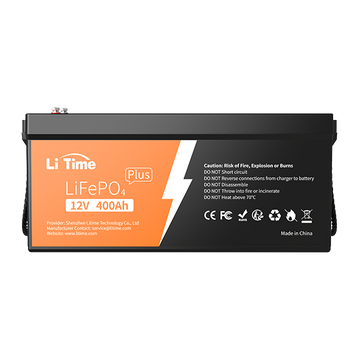
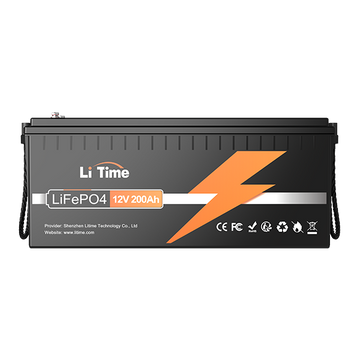
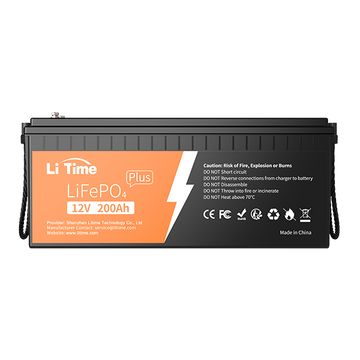
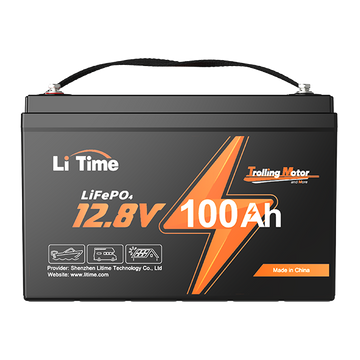
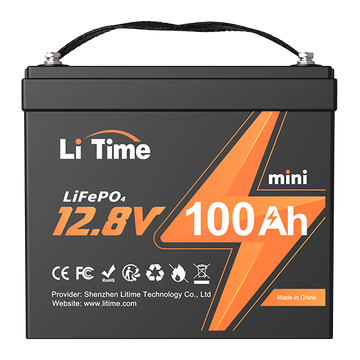
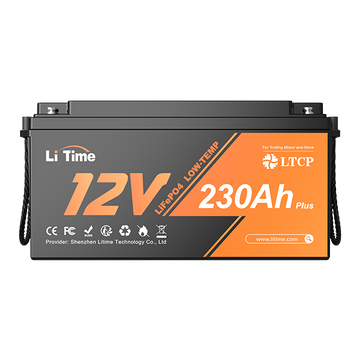
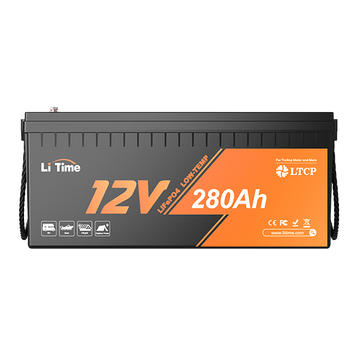
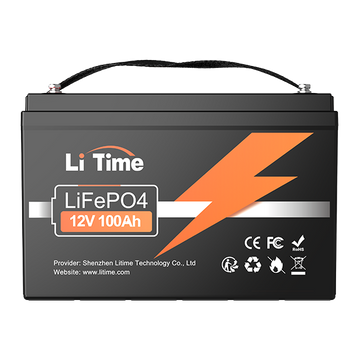
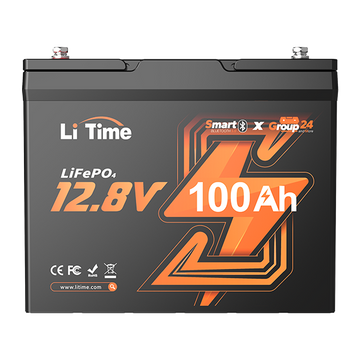
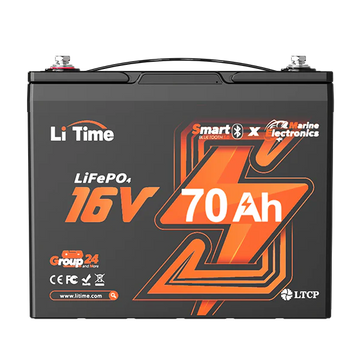
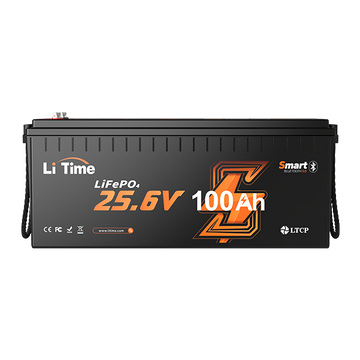
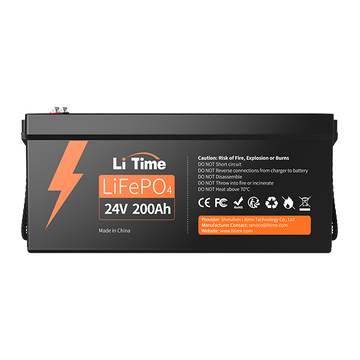
LiTime designs LiFePO₄ batteries specifically for auxiliary power applications. LiTime batteries products focus on RV, camping, and energy systems, emphasizing safety, long lifespan, and efficient performance.
LiTime auxiliary batteries integrate built-in BMS protection to prevent overcharge, over-discharge, and overheating. In real-world camping scenarios, a 12V 100Ah LiTime battery can power:
- A compressor fridge overnight
- LED lighting and USB charging
- Small inverters for laptops

This type of setup is popular among Australian off-grid travelers seeking reliable and low-maintenance power solutions.
Building a Complete Auxiliary Power System
An auxiliary battery performs best when integrated into a complete power system. Supporting components ensure safe charging, efficient energy use, and long-term reliability.
Key accessories include:
- DC-DC chargers
- Inverters
- Battery monitors
- Proper cabling and busbars
According to the U.S. Department of Energy, system-level design can improve energy efficiency by up to 20%, highlighting the importance of proper integration.
How to charge auxiliary battery while driving
A DC-DC charger (driving charger) uses power from the vehicle’s alternator to automatically charge an auxiliary (house) battery while driving. It protects the starter (main) battery and regulates the correct voltage/current for efficient charging—especially for LiFePO4 auxiliary batteries.
It supports charging for six battery types:
- LiFePO4 (lithium iron phosphate)
- Lead-acid
- SLA (sealed lead-acid)
- Gel
- AGM
- Calcium
Common applications include campervans/RVs, boats, and yachts. Many setups combine a DC-DC charger + solar panel charging, enabling auxiliary battery charging across both road and marine vehicles.
Example specs: a model with up to 600W solar input and 40A output. With dedicated solar input terminals, a DC input terminal, and an ACC ignition wire connection, the system can improve overall auxiliary-battery operation efficiency.
Some units also include a reverse-charge feature, allowing power flow from the auxiliary battery back to the main battery when needed.
Built-in charging protections typically include:
- Input overvoltage
- Reverse polarity connection
- Overheating
- Overcharge protection
- BMS protection (for LiFePO4 batteries)
In sunny conditions, solar charging significantly helps recharge the auxiliary battery. While driving, alternator + solar together can further support charging, so by the time you reach your destination for car camping, the auxiliary battery is often topped up and ready to run appliances based on its capacity. If weather is poor and the auxiliary battery is still low on arrival, you can drive a bit longer to replenish enough power for your stay.
Frequently Asked Questions About Auxiliary Batteries
What Is an Auxiliary Battery Used For?
An auxiliary battery supplies power to accessories and electronics independently of the main battery. This protects the starter battery and improves system reliability.
How Do You Troubleshoot an Auxiliary Battery Malfunction?
Troubleshooting typically involves checking voltage, inspecting wiring and chargers, and reviewing BMS status for lithium batteries.
What’s the Difference Between an Auxiliary Battery and a Secondary Battery?
The terms are often used interchangeably, but “auxiliary battery” usually refers to a battery with a specific functional role rather than a simple backup.
Do Luxury Cars Like Mercedes Use Auxiliary Batteries?
Yes. Many Mercedes models use auxiliary batteries to support start-stop systems and onboard electronics, improving both efficiency and reliability.
Conclusion
Auxiliary batteries play a vital role in modern power systems by improving reliability, efficiency, and user experience. Their benefits apply across vehicles, RVs, boats, and off-grid energy setups.
LiTime LiFePO₄ auxiliary batteries offer long-term value through higher usable capacity and longer lifespan, making them ideal for frequent and demanding use. With proper selection, installation, and maintenance, an auxiliary battery becomes a dependable energy backbone that delivers consistent performance and peace of mind.
Recommended Blogs: