




“Do I really need a battery for camping?”
“How is it different from a portable power station?”
As camping has boomed in popularity, more and more people are asking these questions.
In the past, a lantern and a gas stove were enough. Today, most of us bring smartphones, electric blankets, portable fridges, projectors and more. In other words, electricity-heavy camping is becoming the norm, and a reliable portable lithium battery pack for camping can change the whole experience.
This article explains, in beginner-friendly terms, what a lithium camping battery is, how it’s used, and what to watch out for. We’ll focus especially on LiTime’s LiFePO₄ batteries, which are well-known as a lithium ion battery for camping and off-grid use.
- 1. What is a Lithium camping battery?
- 2. Why a Lithium camping battery Is Necessary and How to Use It
- 3. Best Lithium camping battery For Caravan Top 3
- 4. DIY Portable Lithium Battery Pack For Camping
- 5. Important Points When Using a Lithium Battery for Camping
- 6. Frequently Asked Questions About Lithium camping battery
1.What Is a lithium camping battery?
Before you decide whether to book a powered campsite, buy a portable power station, or build your own 12 V system, it helps to clearly understand what a lithium camping battery is and why so many campers are switching to it.
1.1 Are lithium batteries good for camping?
In short, yes—lithium batteries are one of the best options for camping when you want reliable power in a compact, lightweight form. Compared with traditional lead-acid batteries, a lithium camping battery:
- Stores more usable energy in the same capacity (you can safely use 80–90% instead of ~50%).
- Weighs much less, which matters a lot in cars, camper vans and rooftop tents.
- Charges faster from alternators, mains chargers or solar panels.
- Delivers stable voltage so fridges, lights and inverters run properly.
- Lasts for thousands of cycles when used correctly, often outliving multiple lead-acid batteries.
The main downsides are higher upfront cost and the need for compatible chargers, but for anyone who camps regularly, the performance and lifespan usually make a lithium camping battery the smarter long-term choice.
1.2 What Is a lithium camping battery?
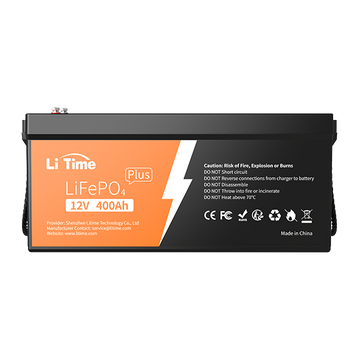
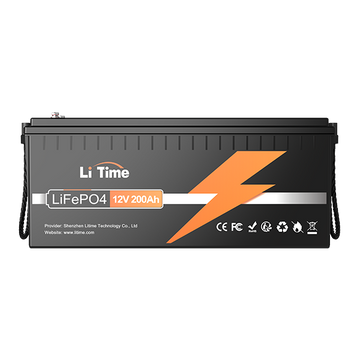
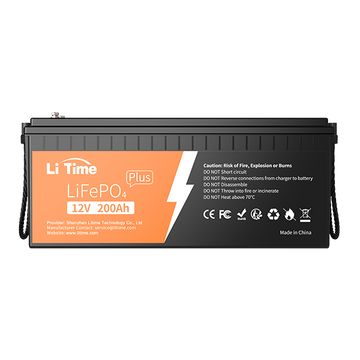
In simple terms, a lithium camping battery is a large-capacity battery (a “tank of electricity”) designed to be used at campsites, for van life, and in camper vans.
Think of it as the mothership of power that lets you run:
- Smartphones and tablets
- Lights and lanterns
- Portable fridges
- Electric blankets
- Fans and small appliances
anywhere around your vehicle or campsite.And it’s not only for camping. A good lithium battery for camping can also serve as:
- Emergency power during disasters and blackouts
- A battery for home solar systems
- A power source for off-grid living
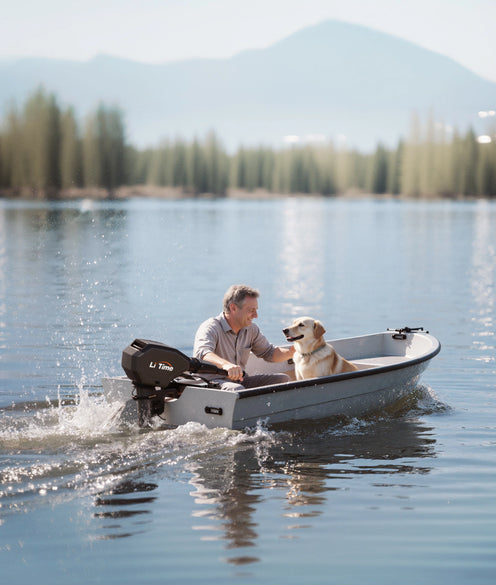
- A battery for low-speed EVs or electric outboard motors
In other words, imagine it as “electricity you can carry with you,” usable both at home and outdoors.

1.3 lithium camping battery vs Portable Power Station
These two are often confused, but strictly speaking they’re different things:
- Battery (lithium camping battery) → the battery itself, the part that actually stores energy
- Portable power station → a finished product that puts everything in one box:
- A battery inside (often a lithium lithium camping battery)
- An inverter so you can use 100 V/230 V AC outlets
- Charging circuits (AC wall charger, 12 V car socket, solar input)
- Protection circuits plus USB ports and AC sockets on the outside
Most products sold online as a “lithium camping battery” are actually portable power stations.
In this article, for clarity, we’ll mainly talk about battery-only solutions – the bare camping lithium battery itself – and how to use it inside an existing 12 V/24 V system.
1.4 Powered Campsites vs lithium camping battery: Which Is Better Value?
You might be wondering, “Why not just book a powered site every time?” That’s one option too.
- Powered campsite → You pay an extra fee every trip (often around ¥1,000–¥2,000 per night or similar in other currencies).
- Buying a lithium camping battery → You pay a larger amount up front, but after that there’s no extra fee each time you camp.
Roughly speaking:
- If you only camp a few times a year, a powered site is often enough.
- If you camp or sleep in your car once a month or more, then over several years a lithium battery camping setup can actually work out cheaper.
On top of that, a dedicated lithium ion battery for camping is useful far beyond the campsite:
- Backup power during blackouts
- Power for a balcony work-from-home setup
- Outdoor events, markets, or DIY work sites
So instead of seeing it as “just a camping gadget,” think of it as shared infrastructure for home + outdoors. With that mindset, investing in a good lithium lithium camping battery starts to make a lot more sense.
2.Why a lithium camping battery Is Useful – and How You Can Use It
So is a stand-alone battery really necessary for camping? In many cases, yes – especially if you want flexibility and long-term value. Here’s why:
- If you already have an electrical system in your vehicle (DC-DC charger, alternator/drive charging, inverter, fuse box, etc.), it often makes more sense to upgrade or expand only the battery rather than buying a whole new portable power station. You just drop in a higher-capacity lithium battery for camping and keep the rest of your system.
- If you want to DIY more capacity, it’s easy to add more batteries of the same series in parallel to expand your bank.
- For camper vans and full van builds, where everything is permanently wired into the vehicle, a battery-only solution has clear advantages over a standalone power station:
- Better heat dissipation
- Easier to secure firmly
- Easier to access for maintenance or replacement
- As a sub-battery separate from your starter battery, a dedicated LiFePO₄ pack can power fridges, lighting, electric blankets and inverter appliances without risking a flat starter battery. You have much more freedom in how you wire and expand the system.
For serious van lifers and regular campers, this flexibility is one of the biggest reasons to choose a dedicated best lithium battery for camping instead of relying solely on one all-in-one device.
3.Best Lithium camping battery For Caravan Top 3
Camping batteries can be used in many ways, so which one should you choose? Below are three LiFePO₄ models from LiTime that work especially well as a portable lithium battery pack for camping.
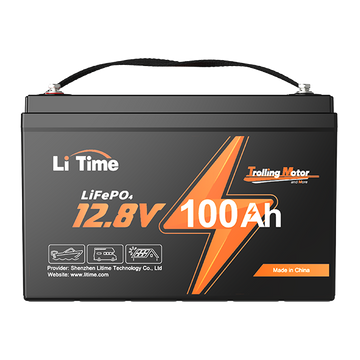
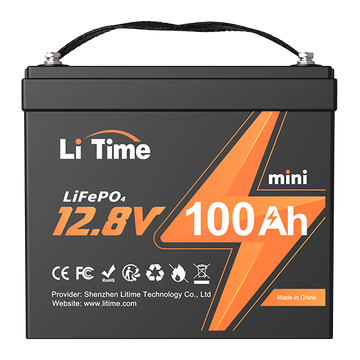
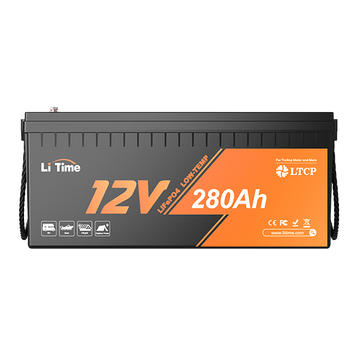
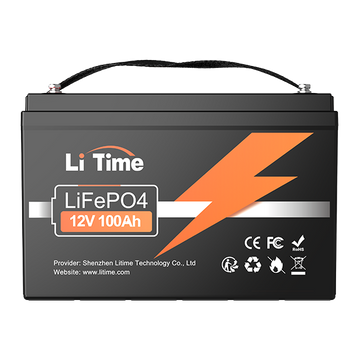
| Item | LiTime 12V 100Ah | LiTime 12V 140Ah Bluetooth | LiTime 12V 280Ah Bluetooth |
|---|---|---|---|
| Nominal capacity | 100Ah / 1280Wh | 140Ah / 1792Wh | 280Ah / 3584Wh |
| Nominal voltage | 12.8V | 12.8V | 12.8V |
| Size (mm) | 330 × 172 × 216 | 330 × 172 × 216 | 522 × 237 × 218 |
| Weight | Approx. 10kg | Approx. 12.71kg | Approx. 26.2kg |
| Bluetooth | None | Yes (Bluetooth 5.0) | Yes (Bluetooth 5.0) |
| BMS continuous discharge | Around 100A class | 150A continuous / 700A peak | 200A continuous (high-power capable) |
| Dust / water protection | IP65 | IP65 | Equivalent to IP65 |
| Low-temperature protection | None | Yes (low-temperature cut-off) | Yes (low-temperature cut-off) |
| Intended use | Basic sub-battery / DIY storage | Car camping, trolling motors, large sub-battery with smartphone monitoring | Camper vans, home storage, heavy-duty sub-battery for high-power appliances |
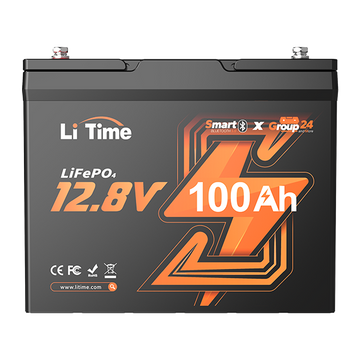
- The 12V 100Ah is a great entry-level camping lithium battery for basic setups.
- The 12V 140Ah Bluetooth suits users who want more capacity plus real-time monitoring on their phone.
- The 12V 280Ah Bluetooth is one of the best lithium batteries for camping when you run fridges, electric blankets and inverter appliances for multiple nights or combine camping with home backup.
4.DIY Portable Lithium Battery Pack For Camping
If you want more flexibility than a ready-made power station, building your own DIY portable lithium battery pack for camping can be a powerful option.A DIY portable lithium battery pack for camping usually starts with a high-quality LiFePO₄ battery (for example a LiTime 12V 100Ah with bluetooth), and then adds the surrounding components you need for real-world use.
You can design a system that matches your exact needs, expand it later, and often save money over the long term—especially if you camp or travel frequently.In practice, your setup might include:
- A LiFePO₄ lithium camping battery (core energy storage)
- A suitable charger (AC charger, DC-DC charger from the alternator, and/or solar charge controller)
- A fused distribution panel for your 12V loads (fridge, lights, fans, USB sockets)
- Optional inverter if you want to run 230V/120V appliances
- Proper cabling, fuses and switches to tie everything together safely
Because you control every part, you can build a compact box or crate—sometimes called a “power box” or “battery box”—that functions very similarly to a commercial portable power station, but with replaceable and upgradable components.When planning a DIY pack, think about:
- Capacity and runtime – How many nights do you want to run your fridge, lights and other devices? This determines whether a 100Ah, 140Ah or 200Ah+ battery makes sense.
- Maximum output – What’s the biggest load you’ll run at once (for example a fridge plus an inverter)? Check the battery’s continuous discharge rating and size your cables and fuses accordingly.
- Charging methods – Will you rely mainly on solar at camp, on alternator charging while driving, or on a mains charger at home and in holiday parks? Choose a LiFePO₄-compatible charger for each source.
- Portability vs. fixed installation – Some people build a fully portable box with handles that can move between car, tent and home; others permanently bolt the lithium battery camping pack into a drawer system or camper van cabinet.
Safety should always be a top priority. Use correctly sized cables, fuses close to the battery, and follow the manufacturer’s recommended charge voltages and current limits for LiFePO₄.
Here’s a clear, simple way to wire a DIY portable lithium battery pack for camping(LiTime 12V lithium battery), with a basic diagram and explanation.
5.Important Safety Tips When Using a Battery for Camping
Camping batteries are incredibly useful, but if you use them incorrectly you can shorten their life or even cause damage. Let’s go over the essentials.
5.1 Avoid High Heat, High Humidity and Extreme Cold
Direct sunlight, being left in a closed car in mid-summer, and damp areas with condensation are all harsh environments for any lithium battery camping setup.
For LiFePO₄ specifically, many models cannot be charged below 0 °C (or are restricted), so for winter camping always check the spec sheet to see what temperature range is safe for charging.
5.2 Prevent Over-Discharge and Over-Charge
Two things are bad for battery life:
- Leaving the battery fully drained for a long time
- Keeping it at very high voltage on continuous charge all the time
LiTime’s LiFePO₄ batteries include a BMS (Battery Management System) that protects against over-discharge, over-charge and abnormal temperature, but even a smart BMS has limits. Use the battery within the recommended operating range, and avoid the habit of “running it to empty every single time.”
5.3 Check State of Charge Regularly and Perform Simple Maintenance
Always check the battery level before and after your trips.
If you won’t use it for a long period, don’t store it either fully charged or completely empty. The ideal storage level is around 40–60% state of charge.
Models with Bluetooth or a shunt-type battery monitor make it very easy to check status from your smartphone or a small meter.
5.4 Pay Attention to Capacity and Output
Think of it this way:
- Capacity (Ah / Wh) → how long and how many devices you can run
- Output (A / W) → how many devices you can power at the same time
If you stack a fridge + electric blanket + inverter appliances, the instantaneous current can rise much higher than you expect. Always check:
- The maximum discharge current of your battery
- The current your inverter and loads will need
Make sure your camping lithium battery and system wiring are sized to handle that safely.
6.Frequently Asked Questions About Camping Batteries
Q. How many years until a lithium camping battery pays for itself?
It depends on how you use it, but as a rough guide:
- Light users who camp only a few times a year For you, it’s less about “payback time” and more about investing in comfort and peace of mind.
- People who camp, car-camp or road-trip at least once a month When you factor in powered site fees and how often you would have to replace an AGM battery, many setups can pay for themselves in around 3–5 years.
The more you also use it as emergency backup and for everyday power at home, the easier it is to recover the cost.
Q. Can I charge a lithium camping battery with solar panels?
Yes—and they’re an excellent match.
Combine:
- Solar panels
- A solar-compatible charge controller
- A LiFePO₄ battery (for example a LiTime lithium ion battery for camping)
and you have an easy semi-off-grid power system.
Key points:
- Match panel output (W) to your needs
- Make sure the controller supports LiFePO₄ charging profiles
- Set the charging voltage and current within the battery’s recommended limits
With quality brands like LiTime, you’ll often find recommended system configurations listed on the product page—following those is the safest option.
Q. For a one-night camping trip, how much battery do I need?
It depends heavily on what you want to run, but here are rough starting points:
- Pattern A – Lights + phone charging + small 40 L fridge → A 12V 100Ah class battery is more than enough for one night and, with careful use, can often cover two nights.
- Pattern B – Pattern A + one or two single electric blankets → A 12V 140Ah class battery or larger is recommended, especially for winter camping where you want reliable warmth all night.
- Pattern C – Fridge + electric blankets + some small inverter appliances → Aim for 12V 200Ah or more. If you plan frequent multi-night trips with lots of electric gear, making a 280Ah battery your main power source is a solid option.
These are only rough guidelines. For a more precise plan, list the wattage of each device you want to use and work backwards to find the required capacity.
Summary
A lithium camping battery is more than just another piece of gear. It can become the power hub for your outdoor life, disaster preparedness and everyday use.To enjoy comfortable and safe trips, choose the capacity and model that best fits your style of camping, how often you go, and what you want to power.
LiFePO₄ batteries from LiTime are lighter, last longer and allow deeper discharges than equivalent lead-acid batteries. As a dedicated lithium battery for camping, they are among the best options if you want a robust, future-proof setup that works just as well at home as it does in the wild.